AAPI-Owned Businesses
AAPI-Owned Wedding Vendors Near Me: How to Find, Verify, and Support Great Vendors in 2026
Updated July 4, 2026
On this page (13 sections)
- Why AAPI-owned wedding vendors matter in 2026
- AAPI-owned, Asian-owned, Pacific Islander-owned, and culturally experienced: what to verify
- Search by culture, category, and city
- Vendor categories to consider
- How to verify ownership without making it weird
- What makes a vendor culturally fluent?
- Questions to ask before hiring
- How to support AAPI-owned wedding vendors after booking
- Example review language
- Mistakes to avoid
- FAQ
- Suggested external sources
- Bottom line
Wedding vendor searches are personal. Couples are not only choosing flowers, photos, food, music, and timelines. They are choosing the people who will move through their families, traditions, languages, and memories on a day that cannot be repeated.
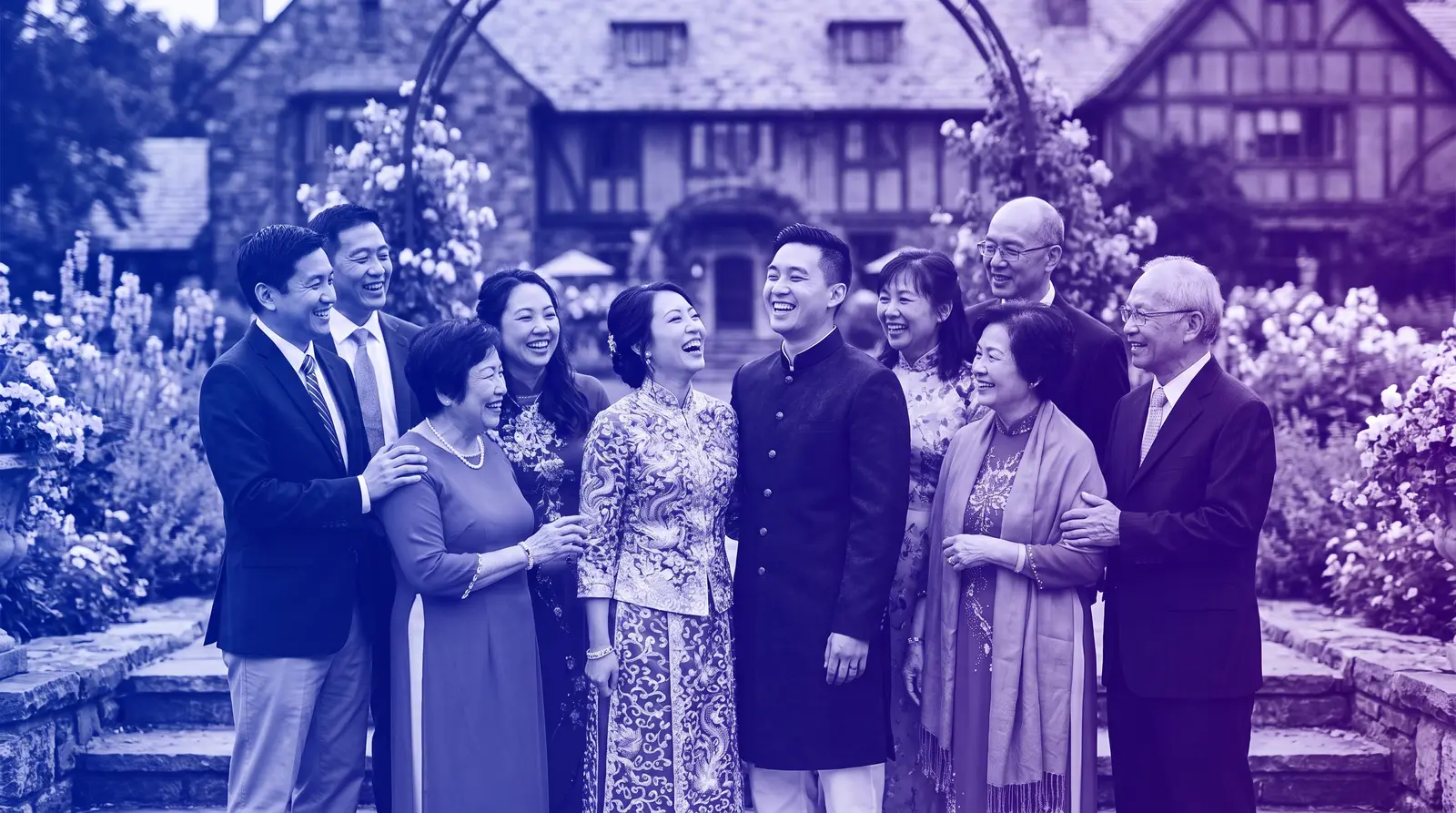
For Asian American, Native Hawaiian, and Pacific Islander couples — and for multicultural couples planning with AAPI families — the right vendor can make the entire experience feel more thoughtful. A planner may understand a tea ceremony timeline. A photographer may know how to capture outfit changes without rushing elders. A caterer may understand regional dishes. A makeup artist may know monolids, undertones, and hair texture. A DJ may understand that the playlist cannot be reduced to one generic “Asian wedding” set.
That is why searches like AAPI-owned wedding vendors near me matter.
But the search needs care. “AAPI-owned,” “Asian-owned,” “Pacific Islander-owned,” “AAPI-friendly,” “culturally experienced,” and “Asian-inspired” are not interchangeable. A useful guide should help couples find great vendors without flattening dozens of cultures into one category.
This guide explains how to search, how to verify ownership respectfully, what vendor categories to consider.
Why AAPI-owned wedding vendors matter in 2026
The wedding market is large, local, and vendor-driven. The Knot Worldwide reported that roughly 2 million U.S. couples married in 2025, contributing to an over-$100 billion wedding industry, with an average wedding cost around $34,000.
AAPI-owned businesses are also a major part of the U.S. business landscape. Census data released in 2025 reported Asian-owned firms accounted for 11.5% of U.S. employer businesses and generated $1.2 trillion in receipts. That economic footprint includes restaurants, photography studios, planning companies, floral designers, beauty businesses, venues, apparel designers, jewelers, calligraphers, entertainers, and event-production firms.
For couples, the value is not abstract. It shows up in details:
- A vendor who knows how long a tea ceremony can take.
- A photographer who understands family hierarchy and portrait expectations.
- A planner who can coordinate multiple ceremonies or outfit changes.
- A caterer who respects regional differences instead of offering a generic menu.
- A beauty artist who has experience with different skin tones, eye shapes, and hair textures.
- A vendor who knows when to ask questions instead of assuming.
AAPI-owned, Asian-owned, Pacific Islander-owned, and culturally experienced: what to verify
AAPI is a broad umbrella. It can include people with roots in East Asia, Southeast Asia, South Asia, Central Asia, Native Hawaiian communities, and Pacific Islander communities. Not everyone uses the term AAPI personally.
| Term | What it may mean | What to verify |
|---|---|---|
| AAPI-owned wedding vendor | Business is owned by someone who identifies within Asian American, Native Hawaiian, or Pacific Islander communities | Ownership statement, founder bio, certification, or direct confirmation |
| Asian-owned wedding vendor | Business is owned by someone of Asian heritage | Specific identity and ownership, if publicly shared |
| Pacific Islander-owned vendor | Business is owned by someone with Pacific Islander heritage | Ownership and preferred terminology |
| South Asian-owned vendor | Vendor may specialize in Indian, Pakistani, Bangladeshi, Sri Lankan, Nepali, or related wedding traditions | Ownership and tradition-specific experience |
| AAPI-friendly vendor | Vendor has experience serving AAPI couples or families | Helpful, but not proof of ownership |
| Asian-inspired vendor | Style, menu, design, or aesthetic draws from Asian cultures | Inspiration does not prove ownership |
| Culturally experienced vendor | Vendor has worked with specific wedding customs | Ask which customs, cultures, and ceremony formats |
The best listings allow businesses to choose their own language.
Search by culture, category, and city
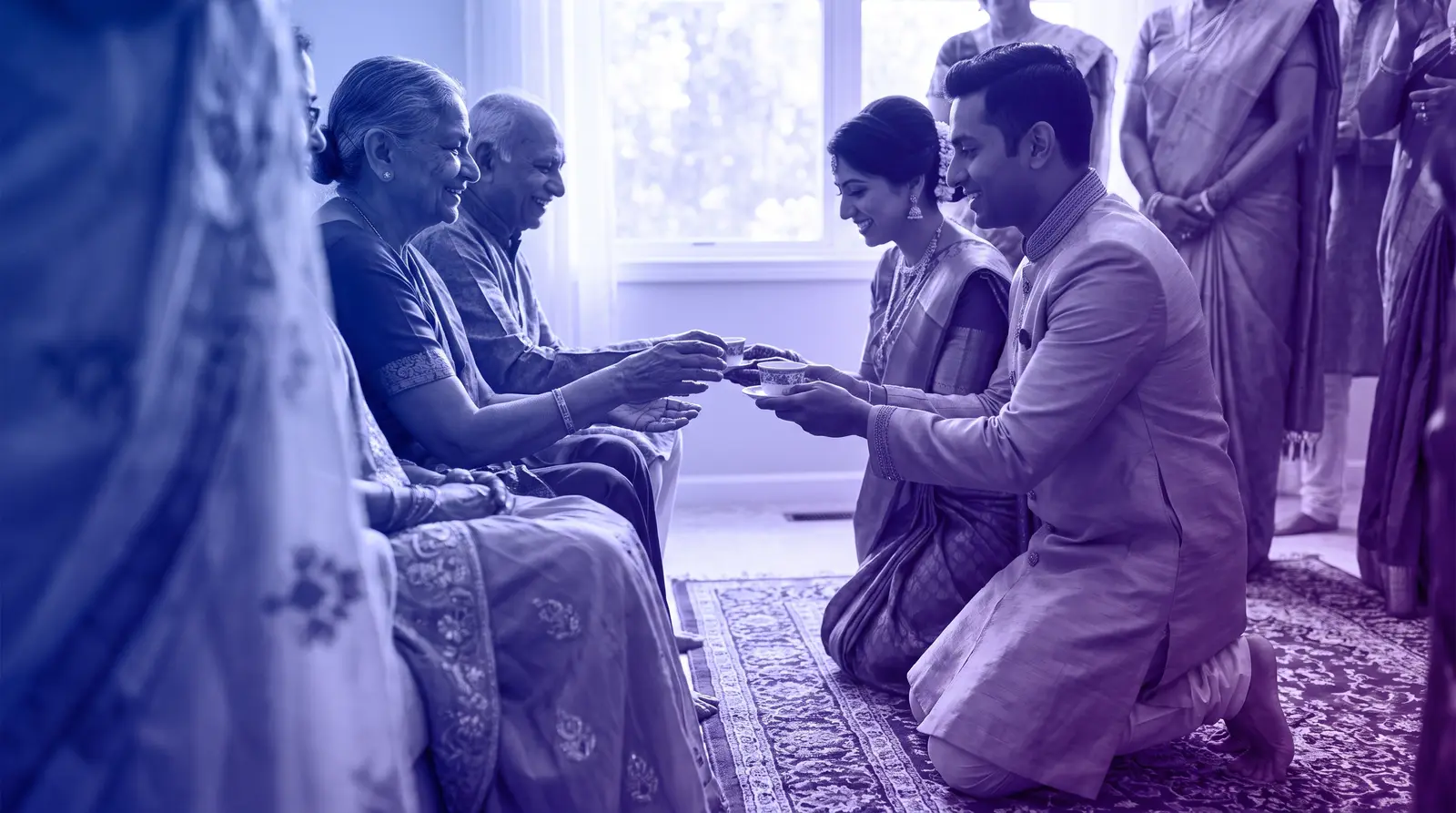
AAPI wedding searches often work better when you get specific. The term “AAPI-owned” is useful for inclusive directories, but many couples search by community, ceremony, or vendor type.
| Search goal | Example queries |
|---|---|
| Broad discovery | AAPI-owned wedding vendors near me |
| Asian-owned vendors | Asian-owned wedding vendors [city] |
| South Asian planning | South Asian wedding planner [city] |
| Chinese tea ceremony | Chinese wedding planner tea ceremony [city] |
| Vietnamese wedding | Vietnamese wedding photographer [city] |
| Filipino wedding | Filipino wedding vendors [city] |
| Korean wedding | Korean wedding photographer [city] |
| Pacific Islander vendors | Pacific Islander wedding vendors [city] |
| Beauty | Asian bridal makeup artist [city], South Asian bridal makeup near me |
| Catering | Asian-owned wedding catering [city], Indian wedding caterer [city] |
Vendor categories to consider
| Vendor category | Why it matters for AAPI weddings | What to ask |
|---|---|---|
| Wedding planner | May coordinate multiple ceremonies, family expectations, attire changes, and cultural timing | Have you planned weddings with our specific traditions? |
| Photographer | Needs to capture rituals, elders, details, attire, and family portraits well | Can we see full galleries from similar weddings? |
| Videographer | Audio, ceremony sequence, speeches, and family moments matter | Can you handle multilingual vows or speeches? |
| Caterer | Regional cuisine matters; “Asian food” is not a category | What specific cuisines and service formats do you offer? |
| DJ/band | Music can span generations and languages | Can you handle our requested genres and emcee style? |
| Florist/decorator | Cultural colors, symbolic details, mandaps, tea sets, stage design, or modern fusion aesthetics may matter | Have you worked with similar design needs? |
| Beauty team | Hair, skin tone, eye shape, dupatta/veil placement, jewelry, and timing may require specialized experience | Do you have experience with our look and attire? |
| Attire/jewelry | Some weddings involve multiple outfits or heirloom pieces | Can you support alterations, styling, or coordination? |
| Officiant/ceremony specialist | Ceremony structure may be religious, cultural, civil, or blended | Do you understand our ceremony format? |
| Stationery/calligraphy | Multilingual invitations and name formatting require care | Can you support multiple scripts or transliteration? |
How to verify ownership without making it weird
Couples may want to support AAPI-owned vendors, but identity questions can feel personal. Keep it simple and let the vendor choose how to answer.
Try:
“We’re trying to support AAPI-owned vendors where possible. Is AAPI-owned or Asian-owned an accurate way to describe your business?”
Or:
“We found you while searching for AAPI-owned wedding vendors. Is there a preferred way you describe your business for directories or vendor credits?”
Do not push if someone prefers not to discuss identity publicly. A vendor may be AAPI-owned but not want that to be their main marketing label. Another may be culturally experienced but not AAPI-owned. Both answers are useful.
What makes a vendor culturally fluent?
Cultural fluency is not about memorizing a list of customs. It is about asking better questions, planning with respect, and understanding that every family is different.
A culturally fluent vendor will usually:
- Ask which traditions matter to this couple, not assume.
- Build a timeline around ceremony needs instead of squeezing them in.
- Know when elders, parents, or extended family may need special communication.
- Avoid treating cultural garments, food, or rituals as props.
- Understand that fusion weddings are not “less traditional.”
- Respect pronunciation and name order.
- Ask about photography restrictions in religious or cultural spaces.
- Prepare for outfit changes and family portrait complexity.
- Understand that food and hospitality can carry deep family meaning.
Questions to ask before hiring
| Question | Why it matters |
|---|---|
| Have you worked with weddings from our specific community or tradition? | Avoids vague “Asian wedding” experience claims |
| Can you show full galleries, timelines, or menus from similar weddings? | Helps verify real experience |
| How do you handle multilingual family communication? | Important for parents and elders |
| Can your team support multiple events or outfit changes? | Many weddings are not one ceremony plus one reception |
| How do you approach cultural details you do not know? | A humble answer is better than overconfidence |
| Are all costs clear, including travel, overtime, rentals, and assistants? | Prevents budget stress |
| Will the lead vendor be present on the wedding day? | Avoids surprise staffing changes |
| How do you handle accessibility, dietary restrictions, or elders’ needs? | Inclusion is broader than identity |
How to support AAPI-owned wedding vendors after booking

Good support goes beyond hiring.
| Action | Why it helps |
|---|---|
| Credit vendors in every public post | Social proof drives wedding inquiries |
| Use specific cultural and service terms in reviews | Helps future couples find relevant vendors |
| Share full vendor lists when submitting weddings to blogs | Prevents smaller vendors from being erased |
| Pay on time | Protects small business cash flow |
| Respect pricing | Cultural expertise is professional expertise |
| Refer them to venues and planners | Vendor networks drive repeat work |
| Ask before using identity labels publicly | Respect privacy and preference |
| Leave reviews on Google and wedding platforms | Improves local SEO |
Example review language
A useful review might say:
“We hired [Vendor Name] for our [Vietnamese/Korean/Indian/Filipino/Chinese/Japanese/Pacific Islander/multicultural] wedding in [City]. They understood the flow of our ceremony, communicated clearly with our families, and helped us feel seen without making assumptions. We especially appreciated their work on [specific service].”
Include specifics:
- Ceremony type
- City and venue type
- Guest count
- Languages used
- Traditions handled
- Communication quality
- Budget transparency
- Whether the vendor worked well with families and elders
Mistakes to avoid
- Treating AAPI as one culture.
- Assuming an Asian-inspired aesthetic means Asian ownership.
- Calling a vendor AAPI-owned based only on name, food, language, or design style.
- Asking intrusive identity questions.
- Assuming all families want traditional elements.
- Assuming all couples want modern fusion elements.
- Leaving smaller vendors out of photo credits.
- Prioritizing viral wedding content over vendor quality.
- Ignoring accessibility, budget transparency, and contract terms.
FAQ
What is the best way to find AAPI-owned wedding vendors near me?
Search by broad category and specific community: “AAPI-owned wedding vendors near me,” “Asian-owned wedding photographer [city],” “South Asian wedding planner [city],” or “Filipino wedding vendors [city].” Then verify ownership or experience through websites, bios, reviews, chambers, and direct vendor confirmation.
Is AAPI-owned the same as Asian-owned?
Not always. AAPI includes Asian American, Native Hawaiian, and Pacific Islander communities. Some vendors prefer Asian-owned, South Asian-owned, Pacific Islander-owned, Filipino-owned, Vietnamese-owned, Korean-owned, or another more specific term.
Is an Asian-inspired wedding vendor AAPI-owned?
No. A style or menu can be inspired by Asian cultures without the business being AAPI-owned. Inspiration and ownership should be labeled separately.
Should I hire only AAPI-owned vendors for an AAPI wedding?
Not necessarily. Hire vendors who are skilled, respectful, available, fairly priced, and aligned with your needs. If supporting AAPI-owned businesses is a priority, include it as one part of the decision.
Suggested external sources
- The Knot Worldwide — 2026 Real Weddings Study: https://www.theknotww.com/press-releases/the-knot-worldwide-unveils-2026-real-weddings-study
- U.S. Census Bureau — Business owner characteristics: https://www.census.gov/newsroom/press-releases/2025/business-owner-characteristics.html
- NMSDC certification process: https://nmsdc.org/certifications/certification-process/
- USPAACC: https://uspaacc.com/
Bottom line
Searching for AAPI-owned wedding vendors near me can help couples discover talented planners, photographers, caterers, florists, beauty artists, DJs, venues, and designers who might otherwise be buried beneath large wedding platforms.
But the search works best when it is specific, respectful, and honest. Verify ownership without guessing. Ask about the actual traditions, languages, and family needs involved. Credit vendors publicly. Pay fairly. Leave detailed reviews.
Keep reading
AAPI-Owned Businesses
How to Support AAPI-Owned Businesses Year-Round in 2026
AAPI-Owned Businesses
AAPI-Owned Brands to Support in 2026: How to Find, Verify, and Buy Better

AAPI-Owned Businesses
AAPI-Owned Businesses in 2026: How to Find, Verify, and Support Asian American, Native Hawaiian, and Pacific Islander Entrepreneurs
Own or know an inclusive business?
List it free so people can discover it year-round — with a source you control.
List your business