Inclusive Customer Experience
Inclusive Conferences and Networking Events in 2026: A Practical Guide for Hosts, Sponsors, Speakers, and Attendees
Updated July 4, 2026

On this page (14 sections)
- Quick answer: what makes a conference inclusive?
- Why inclusive conferences matter in 2026
- The inclusive conference planning framework
- Speaker and panel inclusion checklist
- Registration and pricing inclusion
- Networking that does not reward only insiders
- Accessibility and accommodations
- Safer event policies
- Sponsor inclusion
- Vendor and exhibitor inclusion
- Content follow-up
- FAQ
- Bottom line
- Suggested external sources
A conference can say “everyone belongs” and still be built for the same people who always had access.
The speaker lineup may lack diversity. The ticket price may quietly exclude small business owners. The venue may be hard to navigate. The networking format may reward only extroverts and insiders. The event app may not work well with screen readers. The after-party may center alcohol. The registration form may force legal names. The panel may include one underrepresented speaker expected to speak for an entire community.
That is not inclusion. That is branding.
A truly inclusive conference is designed so more people can attend, contribute, learn, connect, and leave with something useful. It does not treat accessibility, representation, safety, and affordability as separate “nice to have” projects. It builds them into the event strategy.
This guide is for business conferences, supplier diversity fairs, chamber events, nonprofit convenings, women’s leadership events, LGBTQ+ workplace summits, disability inclusion events, multicultural business expos, veteran entrepreneur events, and local networking nights.
Quick answer: what makes a conference inclusive?
An inclusive conference is an event where participation is not limited by avoidable barriers.
That means the organizer thinks about:
- who is invited
- who can afford to attend
- who is represented on stage
- who gets paid or promoted
- how people request accommodations
- whether the venue and digital tools are accessible
- whether networking is structured fairly
- how harassment or exclusion is handled
- whether food, rest, prayer, nursing, sensory, and accessibility needs are considered
- whether small and underrepresented businesses can benefit, not just sponsor the event
An inclusive conference does not need to be perfect. But it does need to be intentional, transparent, and responsive.
Why inclusive conferences matter in 2026
In 2026, conferences are more than learning events. They are talent pipelines, supplier pipelines, deal rooms, hiring signals, content engines, and reputation moments.
A conference can help a diverse-owned business find procurement opportunities. It can help a disabled professional discover an employer that actually supports accommodations. It can help LGBTQ+ workers assess whether a company is serious about inclusion. It can help women founders find capital. It can help immigrant, AAPI, Black, Latino, veteran, and rural entrepreneurs find networks they were previously excluded from.
But conferences can also reproduce inequality if organizers do not design them carefully.
Common problems include:
- panels that discuss inclusion without including affected people
- unpaid speakers from underrepresented communities
- inaccessible venues or event apps
- expensive tickets without scholarships
- networking that favors people with existing status
- no clear code of conduct
- no quiet space or rest area
- no captions, microphones, or transcripts
- sponsor packages that only large companies can afford
- “diversity” sessions placed at the margins instead of the main program
Good event design can change that.
The inclusive conference planning framework
Think about inclusion across five layers.
| Layer | Question to ask |
|---|---|
| Access | Can people physically, digitally, financially, and linguistically participate? |
| Representation | Who is visible on stage, in marketing, and in leadership? |
| Power | Who gets paid, credited, introduced, promoted, and connected? |
| Safety | What happens if someone is harassed, misgendered, ignored, or excluded? |
| Outcomes | What do attendees leave with besides inspiration? |
A conference that looks diverse but does not share power is not very inclusive. A conference that is accessible but only affordable to executives still excludes many people. A conference that has strong speakers but no follow-up may feel good for a day and change nothing.
Speaker and panel inclusion checklist
Speaker diversity is not about filling a quota. It is about making the conversation more accurate.
| Check | Better practice |
|---|---|
| Speaker sourcing | Build speaker lists before you need them, not the week before the event. |
| Representation | Include people across race, gender, disability, LGBTQ+ identity, age, geography, business size, and lived experience where relevant. |
| Expertise | Do not invite someone only because of identity; invite them because their expertise matters. |
| Compensation | Pay speakers when possible, especially independent experts, small business owners, and nonprofit leaders. |
| Tokenization | Do not ask one person to represent an entire community. |
| Moderation | Give moderators guidance on inclusive introductions and question handling. |
| Accessibility | Ask speakers what they need to present well. |
| Preparation | Share panel questions or themes in advance. |
| Promotion | Promote speakers equitably, not only headline names. |
Better panel titles
| Weak title | Better title |
|---|---|
| “Diversity in Business” | “How Diverse-Owned Suppliers Win Real Procurement Opportunities” |
| “Women in Leadership” | “What Actually Helps Women Advance: Pay, Promotion, Flexibility, and Sponsorship” |
| “LGBTQ Inclusion” | “LGBTQ Workplace Trust in 2026: Benefits, Safety, and Employer Transparency” |
| “Accessibility Matters” | “How to Plan Events and Websites Disabled People Can Actually Use” |
Specific topics feel more useful and less performative.
Registration and pricing inclusion
Ticket pricing is an inclusion issue.
Not every event needs to be free. But organizers should know who the price excludes.
| Pricing barrier | Possible solution |
|---|---|
| High general admission | Offer early-bird, student, small business, nonprofit, or community rates. |
| Travel costs | Offer virtual access or regional satellite events. |
| Sponsor-only access | Create networking paths that are not limited to top-tier sponsors. |
| Hidden costs | Be clear about parking, meals, materials, and add-ons. |
| Scholarship stigma | Make scholarship applications simple and respectful. |
| Refund inflexibility | Offer reasonable transfer/refund options when possible. |
If the event is meant to support diverse entrepreneurs, the pricing model should not exclude most diverse entrepreneurs.
Networking that does not reward only insiders
Traditional networking often works best for people who already know how to enter the room.
Inclusive networking creates structure.
Try:
- hosted introductions
- topic tables
- industry meetups
- supplier-buyer matchmaking
- first-time attendee meetups
- quiet networking spaces
- name badges with conversation prompts
- opt-in attendee directories
- small-group roundtables
- no-alcohol networking options
- structured “ask and offer” sessions
- post-event connection emails
Networking format comparison
| Format | Works well for | Watch out for |
|---|---|---|
| Open reception | Informal relationship building | Can exclude introverts, newcomers, disabled attendees, and people outside insider networks. |
| Topic tables | People with shared goals | Needs clear signage and facilitation. |
| Speed networking | Quick exposure | Can be overwhelming or inaccessible without breaks. |
| Buyer-supplier matchmaking | Procurement outcomes | Needs prep, buyer accountability, and realistic expectations. |
| Small roundtables | Deeper conversation | Needs good facilitation. |
| Virtual networking | Remote access | Needs moderation and accessible platform design. |
Accessibility and accommodations
Accessibility should be visible before registration.
Every conference page should say:
- whether the venue has step-free entry
- whether accessible restrooms are available
- whether captions or interpretation will be provided or available by request
- whether slides or materials will be shared
- whether food allergens will be labeled
- whether there is a quiet space
- whether service animals are welcome
- how to request accommodations
- who to contact with questions
For larger conferences, consider an accessibility lead or desk. Do not make the general registration volunteer guess how to handle accommodation needs.
Safer event policies
Inclusive events need a code of conduct that people can actually use.
A good policy should be:
- easy to find
- written in plain language
- included in registration materials
- shared with sponsors, speakers, vendors, volunteers, and attendees
- clear about harassment, discrimination, stalking, unwanted photography, intimidation, and retaliation
- clear about how to report a concern
- clear about who receives reports
- clear about possible actions
A code of conduct is only meaningful if the team is prepared to act.
Sponsor inclusion
Sponsors shape the event. They should not only buy visibility; they should support access and outcomes.
Inclusive sponsor opportunities could include:
- captioning sponsor
- scholarship sponsor
- quiet room sponsor
- accessible transportation sponsor
- small-business vendor booth sponsor
- founder breakfast sponsor
- childcare/caregiver support sponsor
- interpreter sponsor
- community ticket sponsor
- post-event resource library sponsor
This is better than only offering logo placement and VIP tables.
Vendor and exhibitor inclusion
If the conference includes vendors, make the vendor process accessible too.
| Vendor issue | Better practice |
|---|---|
| Booth fees | Offer small business/community booth rates. |
| Setup time | Provide clear load-in instructions and accessibility notes. |
| Table placement | Do not place diverse-owned vendors in low-traffic corners. |
| Payment | Avoid slow reimbursement for small vendors. |
| Electricity/Wi-Fi | State costs and availability clearly. |
| Promotion | Promote vendors before and after the event. |
| Procurement | Help vendors meet buyers, not just other vendors. |
Content follow-up
A conference should not disappear after the closing remarks.
Post-event follow-up can include:
- captioned recordings
- transcripts
- speaker slides
- resource links
- supplier directories
- attendee opt-in connection lists
- accessibility feedback survey
- sponsor outcome report
- next-step guides
- office hours
- city or industry resource pages
FAQ
What is the difference between a diverse conference and an inclusive conference?
A diverse conference may have a varied speaker lineup or audience. An inclusive conference also considers access, power, safety, affordability, participation, and outcomes.
Should speakers be paid?
When possible, yes. This is especially important for independent speakers, small business owners, disabled advocates, community leaders, and people from underrepresented groups who are often asked to educate others for free.
Are scholarships enough to make an event inclusive?
Scholarships help, but they are not enough by themselves. Inclusive events also need accessible venues, clear policies, useful programming, structured networking, and respectful follow-up.
Should networking events include alcohol?
They can, but alcohol should not be the only networking path. Offer appealing non-alcoholic options and create networking formats that do not center drinking.
How can small events become more inclusive without a large budget?
Start with clear event details, accessible venue choice, microphone use, readable materials, simple accommodation request language, flexible seating, food labels, and a respectful code of conduct.
Bottom line
Inclusive conferences are not made by one diverse panel or one inspiring keynote.
They are made through dozens of practical choices: who is invited, who is paid, who can afford to attend, who can enter the room, who can hear and see the content, who is introduced to buyers, who feels safe asking questions, and who leaves with something useful.
Inclusion is not only about who appears on the stage. It is about who can participate in the room.
Suggested external sources
- W3C WAI — Making Events Accessible: https://www.w3.org/WAI/teach-advocate/accessible-presentations/
- ADA.gov — Effective Communication: https://www.ada.gov/resources/effective-communication/
- CDC — Disability Inclusion Strategies: https://www.cdc.gov/disability-inclusion/strategies/index.html
- Section508.gov — Social Media Accessibility Toolkit: https://www.section508.gov/create/social-media/
- Out & Equal — LGBTQ+ workplace inclusion resources: https://outandequal.org/resources/
Keep reading

Inclusive Customer Experience
How to Support Diverse-Owned Businesses on a Budget in 2026

Inclusive Customer Experience
How to Write a Review That Actually Helps Diverse-Owned Businesses in 2026
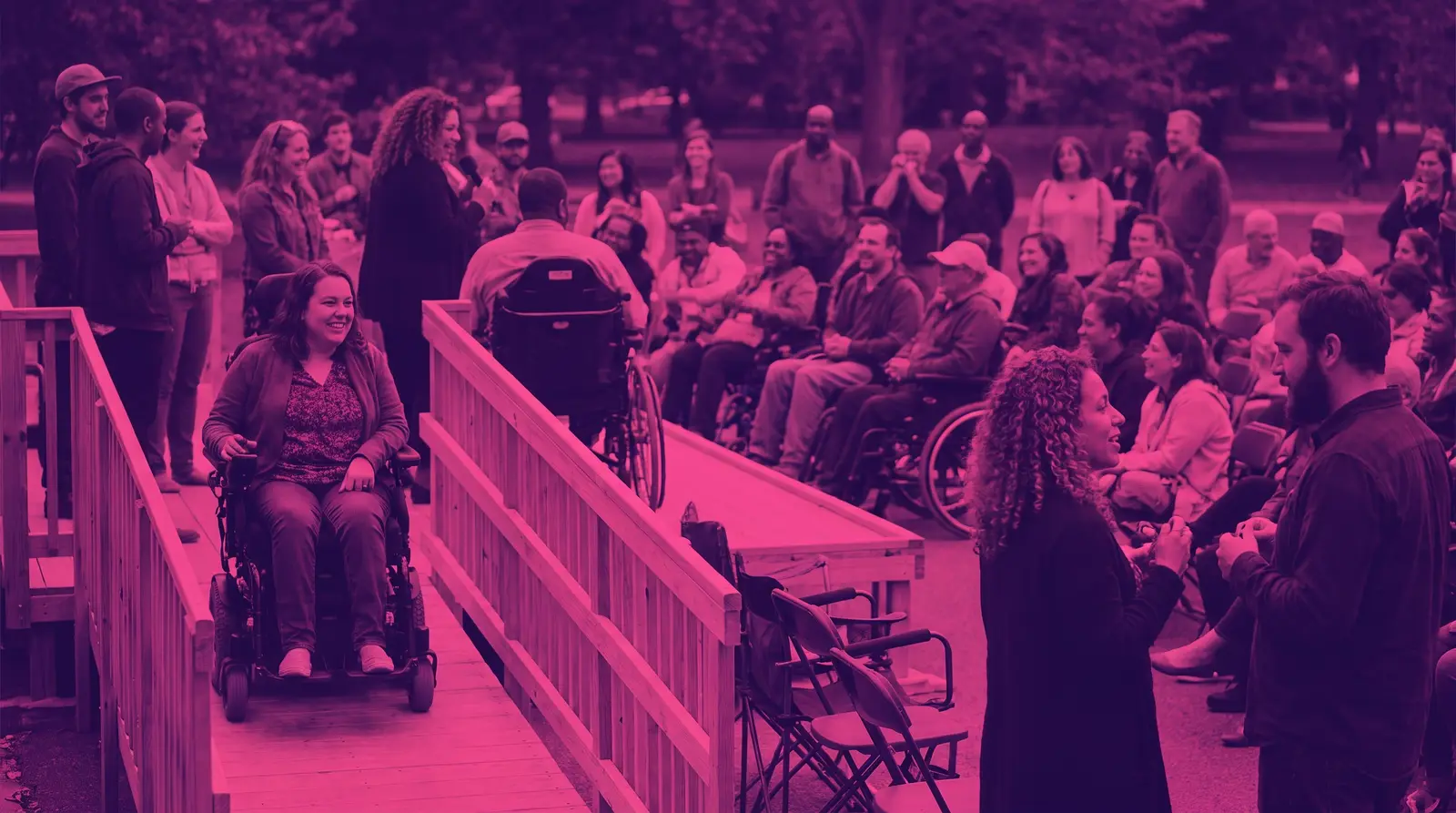
Inclusive Customer Experience
Accessible Events Checklist for Inclusive Businesses in 2026: Venues, Registration, Communication, Food, and Follow-Up
Own or know an inclusive business?
List it free so people can discover it year-round — with a source you control.
List your business