Inclusive Customer Experience
Inclusive Signage Guide for Businesses in 2026
Updated July 4, 2026

On this page (12 sections)
- What inclusive signage means
- The most important signs to review first
- Accessible signage basics
- Examples of better inclusive signage
- Restroom signage: clarity without making people feel watched
- Service animal signage: avoid accidental discrimination
- Signage for communication access
- Multilingual and plain-language signage
- Digital signs and screens
- Signs for inclusive events and pop-ups
- Quick signage audit
- FAQ
Good signage quietly removes stress.
It tells people where to enter, where to check in, where to find the restroom, whether service animals are welcome, how to ask for help, where the quiet room is, how to exit, and what to expect. It helps customers who are disabled, Deaf, hard of hearing, blind or low vision, neurodivergent, older, new to the language, anxious, in a hurry, or simply visiting for the first time.
Bad signage does the opposite. It makes people ask unnecessary questions, guess where they are allowed to go, disclose needs they would rather keep private, or leave before they ever reach the counter.
Inclusive signage is not about covering every wall with labels. It is about giving people the right information at the right moment in a way they can actually use.
This guide is for businesses that want signage that is clearer, more accessible, more welcoming, and less awkward in 2026.
What inclusive signage means
Inclusive signage is signage that helps more people understand and navigate a space safely and respectfully.
It usually combines four things:
| Signage quality | What it means |
|---|---|
| Clear | People can understand it quickly. |
| Accessible | People with disabilities can use it, including people with vision, mobility, cognitive, or communication disabilities. |
| Respectful | The wording does not shame, stereotype, exclude, or over-police customers. |
| Useful | It appears where people need it, not hidden after the point of confusion. |
A business can have beautiful branding and still have confusing signage. The most inclusive signs are often simple.
The most important signs to review first
Do not start with decorative signs. Start with signs that affect access, safety, and dignity.
| Sign type | Why it matters | Examples |
|---|---|---|
| Entrance signs | Help people find the right way in | “Accessible entrance on Oak Street side” |
| Wayfinding signs | Reduce confusion inside the space | “Restrooms →” “Check-in here” |
| Restroom signs | Affect privacy, accessibility, and comfort | “All-gender restroom” “Accessible restroom” |
| Service animal signs | Prevent staff confusion and customer conflict | “Service animals welcome” |
| Communication signs | Help customers request support | “Need written communication? Ask us.” |
| Checkout/service signs | Clarify process and reduce line anxiety | “Order here / Pick up here” |
| Safety signs | Support evacuation and emergency access | Exit routes, alarms, emergency instructions |
| Event signs | Help guests navigate temporary spaces | Registration, quiet room, captions, seating |
Accessible signage basics
Accessible signage can include visual readability, tactile lettering, Braille, mounting location, contrast, icons, and placement. Requirements vary depending on the sign type and the space, so businesses should check applicable standards before ordering permanent signs.
Still, a practical review starts with these questions:
- Is the sign easy to see from the expected viewing distance?
- Is the text large enough?
- Is there strong contrast between text and background?
- Is the font readable, not overly decorative?
- Is the sign mounted where people expect to find it?
- Is it blocked by furniture, plants, displays, or doors?
- Does it use plain language?
- Does it rely only on color?
- Does it use icons that are easy to understand?
- Does it support people who cannot hear announcements or staff instructions?
If a sign matters for access, do not make it subtle.
Examples of better inclusive signage
| Instead of | Use |
|---|---|
| Handicapped bathroom | Accessible restroom |
| Ladies / Gentlemen only | Restroom / All-gender restroom / Accessible restroom |
| No pets | Service animals welcome. Pets are not permitted. |
| Ask staff for disabled entrance | Step-free entrance on side parking-lot entrance. |
| Must speak to cashier | Need help ordering? Written assistance available. |
| Quiet room for special needs | Quiet room available for anyone who needs a lower-stimulation space. |
| Wheelchair bound entrance | Accessible entrance |
| Employees only!!!! | Staff area only. Please ask if you need assistance. |
Tone matters. A sign can be firm without being hostile.
Restroom signage: clarity without making people feel watched
Restroom signs are one of the most visible signals of whether a space understands inclusion. That does not mean every business needs dramatic signage. It means customers should know where the restroom is, whether it is accessible, and whether single-user or all-gender options exist.
Good restroom signage is:
- Easy to find
- Consistent throughout the space
- Clear about accessibility features when applicable
- Not based on stereotypes or jokes
- Not designed to police people’s gender presentation
- Respectful of privacy
Examples:
| Space | Signage option |
|---|---|
| Single-user restroom | “Restroom” or “All-Gender Restroom” |
| Accessible single-user restroom | “Accessible Restroom” with appropriate accessibility symbol where applicable |
| Multiple restrooms | Clear wayfinding plus room labels |
| Event venue | “Restrooms →” plus “Accessible restroom located near registration” |
| Older building with limits | “Restroom down one step. Ask staff for nearby accessible restroom options.” |
If accessibility is limited, say so plainly. Customers would rather know before they need it.
Service animal signage: avoid accidental discrimination
Many businesses post “No pets” signs. That is fine in many contexts, but staff and customers also need to understand service-animal access.
A better sign is:
Service animals welcome. Pets are not permitted inside.
This wording sets a boundary without creating confusion. Staff should still be trained on what they may and may not ask under ADA service-animal rules.
Avoid signs that say:
- “Certified service animals only”
- “Must show paperwork”
- “Service vest required”
- “Emotional support animals allowed under ADA”
Those statements can be inaccurate or misleading.
Signage for communication access
Not every customer communicates the same way. Some people may be Deaf or hard of hearing. Some may have speech disabilities. Some may process information better in writing. Some may be anxious in loud settings.
Simple signs can help:
- “Need written communication? We’re happy to help.”
- “Menus available in large print upon request.”
- “For pickup questions, text us at [number].”
- “Captions are available for this video.”
- “Interpreter requests for events: please contact us by [date].”
- “Quiet seating available on request when possible.”
The best communication signs do not make customers prove anything. They simply show options.
Multilingual and plain-language signage
Inclusive signage also includes language access. This is especially important for restaurants, clinics, service businesses, events, schools, government-facing services, and neighborhoods with multilingual communities.
A few practical rules:
- Translate the signs that affect safety, access, payment, and process first.
- Use professional translation for important signs when possible.
- Avoid tiny translated text under huge English text.
- Use icons carefully; not all icons are universal.
- Do not use machine translation for legal, medical, emergency, or safety instructions without review.
- Keep messages short.
Plain language helps everyone, including people reading quickly or in a second language.
Digital signs and screens
Digital signs can be useful, but they can also create barriers.
Check for:
| Issue | Better practice |
|---|---|
| Text changes too quickly | Leave each message long enough to read. |
| Low contrast | Use strong contrast and large text. |
| Tiny menus | Provide printed or mobile-accessible versions. |
| Video with no captions | Add captions for spoken content. |
| Flashing animation | Avoid flashing content that may trigger seizures or discomfort. |
| Screen-only instructions | Provide staff support and written backup. |
If your restaurant menu, event schedule, or waiting-room instructions appear only on a screen, make sure customers have another way to access the same information.
Signs for inclusive events and pop-ups
Temporary events often fail because people assume the venue’s permanent signs are enough. They usually are not.
For events, add clear signs for:
- Registration/check-in
- Accessible entrance
- Elevators or ramps
- Restrooms
- Quiet room or lower-stimulation area
- Captioned session room
- Interpreter location if applicable
- Food allergy information
- Prayer/meditation/lactation room if provided
- Emergency exits
- Help desk
Make the help desk easy to find. Inclusion fails quickly when people do not know whom to ask.
Quick signage audit
Walk through your space and answer these questions:
- Can a new customer tell where to enter?
- Can a customer find the accessible entrance without asking?
- Can a customer find the restroom before they urgently need it?
- Are restroom signs respectful and clear?
- Are service-animal rules posted accurately?
- Are checkout, pickup, and waiting areas labeled?
- Can Deaf or hard-of-hearing customers access information that is announced verbally?
- Can blind or low-vision customers use required permanent signs where applicable?
- Are signs blocked by decor, displays, or crowds?
- Does the tone of the signage sound welcoming or threatening?
FAQ
What is inclusive signage?
Inclusive signage is signage designed to help more people understand, navigate, and use a space. It combines accessibility, plain language, respectful wording, useful placement, and clear visual design.
Are all business signs required to have Braille?
No. Requirements depend on the type of sign and how it is used. Permanent room-identification signs are treated differently from temporary signs, menus, promotional posters, or decorative signs. Businesses should check the ADA Standards and local requirements for their specific situation.
Should restroom signs say “all gender”?
For single-user restrooms, many businesses use “Restroom” or “All-Gender Restroom.” The best choice depends on the space, local rules, and customer needs. The sign should be clear, respectful, and privacy-protective.
What is the easiest signage improvement for a small business?
Start with entrance, restroom, service-animal, and checkout/pickup signs. Those affect access and stress the most. Then improve contrast, text size, placement, and online accessibility notes.
Keep reading

Inclusive Customer Experience
How to Support Diverse-Owned Businesses on a Budget in 2026

Inclusive Customer Experience
How to Write a Review That Actually Helps Diverse-Owned Businesses in 2026
Inclusive Customer Experience
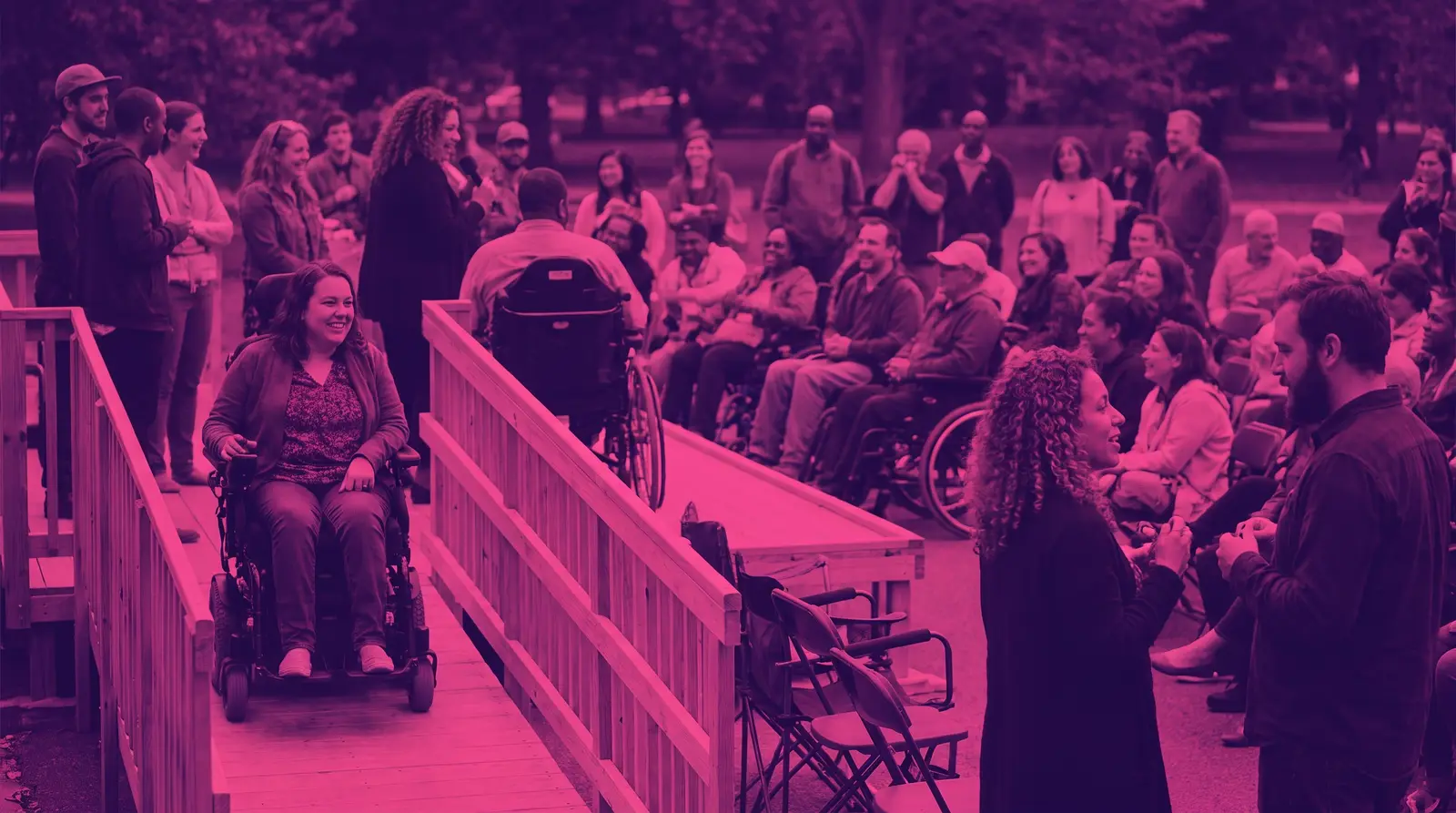
Accessible Events Checklist for Inclusive Businesses in 2026: Venues, Registration, Communication, Food, and Follow-Up
Own or know an inclusive business?
List it free so people can discover it year-round — with a source you control.
List your business