Trust & Verification
How to Hire a Contractor You Can Trust
Updated September 29, 2026Consumer Guide
On this page (11 sections)
A good contractor does solid work, keeps you informed and treats everyone in your home with respect. Here's how to find one.
Hiring someone to work on your home means letting them into your space, often for weeks. It can also mean one of the biggest checks you write all year.
Most of the protection comes from a handful of simple checks. And the same conversation that tells you whether someone is competent will usually tell you whether they are respectful too.
Start with the same things everyone should look for
Before anything else, make sure you're talking to someone who is qualified to do the job.
1. They hold the right license, and you checked it yourself
Contractor licensing is set by each state, and sometimes by counties and cities. Some states license most contractors statewide. Others leave general home improvement work to local governments while still licensing trades like electrical and plumbing.
There is no single national lookup. To check:
- Search "[your state] contractor license lookup" and use the result that ends in .gov.
- If your state doesn't license home improvement contractors, ask your city or county building department what local license or registration applies.
- Match the name and license number on the lookup to the name on the bid and the contract.
- Look at the license status, the license type and any complaint or discipline history the site shows.
Ask for the license number up front. A professional will give it without hesitation.
2. They carry insurance, and they can prove it
General liability insurance covers damage the contractor causes to your property. Workers' compensation covers their workers if someone gets hurt on your job. Without it, an injury on your property could become your problem.
Ask for a certificate of insurance for both. Better yet, ask the contractor's insurance agent to send it to you directly, then call the insurer to confirm the policy is active.
3. They give you a detailed written bid
Get written bids from at least three contractors, based on the same description of the work.
A useful bid lists the work to be done, the materials (brand, model or grade where it matters), the timeline and the price. A single number on a business card is not a bid.
When bids vary widely, ask why. The lowest bid is not automatically the best one. An unusually low price can mean a missed step, cheaper materials or a plan to make it up in change orders.
4. They're clear about permits
Many projects need a permit from your local building department, especially structural, electrical, plumbing and roofing work. If you're unsure, call and ask.
In most cases the contractor should pull the permit, because it ties the work to their license. Your contract should say who is responsible.
Then look for signs of genuine inclusivity
A contractor will be in and out of your home. You should feel comfortable with how they treat everyone who lives there.
They talk to you, not around you
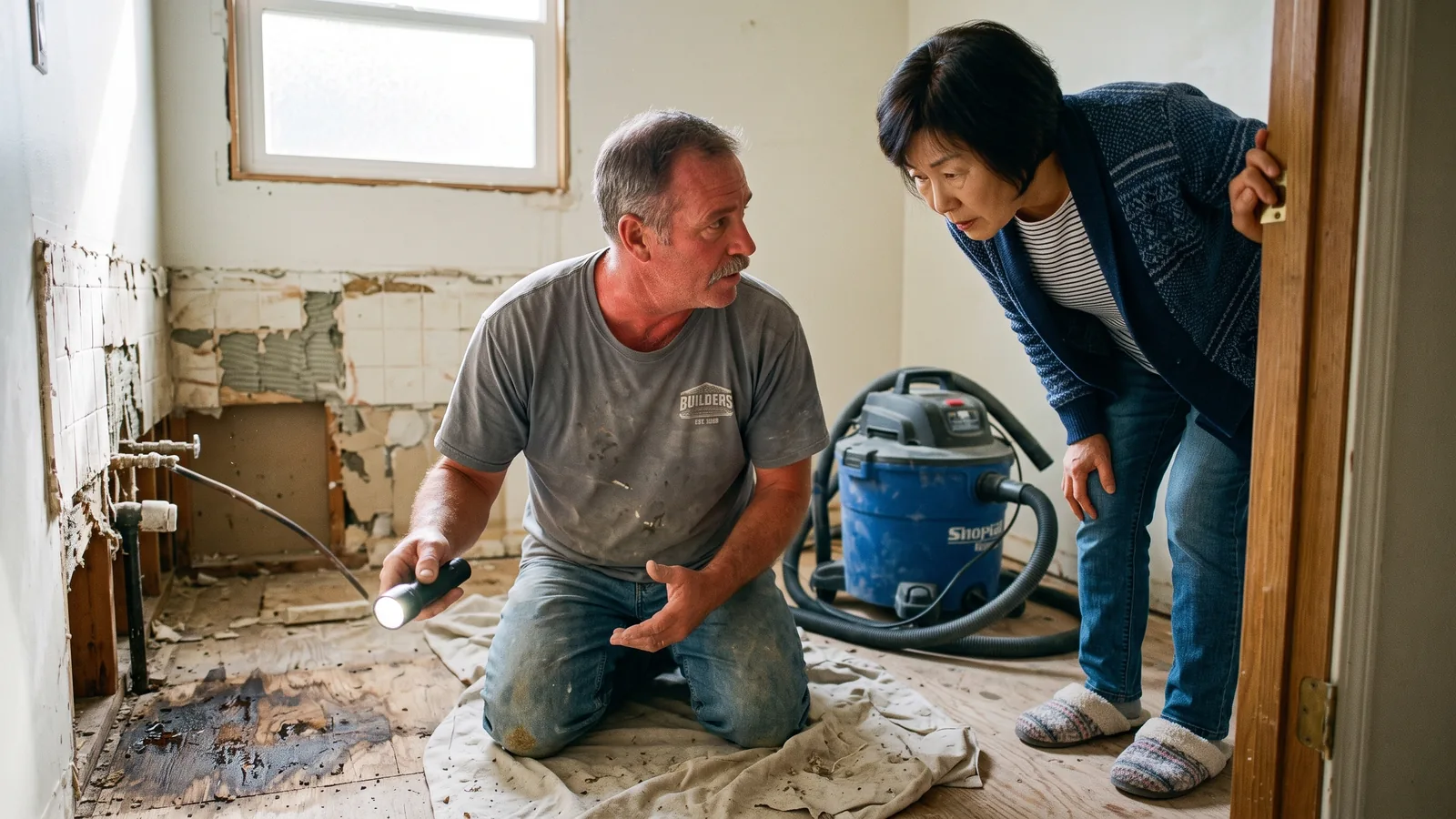
A respectful contractor speaks to whoever is making the decision. They don't direct every question to the man in the room, the younger family member or the person they assume is the homeowner.
They ask who they should coordinate with. Then they listen.
They treat everyone in the household the same way
Your partner, your kids, your parents, your roommates, your caregiver. Everyone should get the same courtesy.
Watch for small things. Do they use the names people give them? Do they make comments about your family, your faith or how your home is decorated? You shouldn't have to manage a worker's opinions in your own house.
They take accessibility seriously
If someone in your home uses a wheelchair, has limited mobility or low vision, or plans to age in place, the right contractor asks about it early.
That applies to the project itself, like a ramp, a curbless shower, grab bars, wider doorways or better lighting. It also applies to the work: keeping paths clear, not blocking the only accessible entrance, and warning you before water or power goes off.
For aging-in-place projects, look for a Certified Aging-in-Place Specialist (CAPS), a designation from the National Association of Home Builders, which keeps a searchable directory of credential holders. It isn't a guarantee, but it shows training for this kind of work.
They make communication work for you
If you're more comfortable in a language other than English, ask whether someone on the team speaks it. Some contractors have bilingual staff.
Either way, you should get the bid, the contract and any change orders in writing, in words you can read and understand. If you can't read something comfortably, have someone you trust go over it before you sign.
If someone in your home is deaf or hard of hearing, a contractor who happily texts or emails updates is making an effort that counts.
A few things that would make us pause
They knock on your door after a storm. Scammers and unlicensed crews often show up in disaster areas. Find your own contractor instead of hiring whoever arrives first.
They want cash only, or the full price up front. Pay by check or credit card so you have a record. Never pay the full amount before the work starts.
They suggest skipping the permit. "You don't really need one" can mean they aren't licensed, or that the work wouldn't pass inspection. Unpermitted work can cause problems with insurance and when you sell.
They pressure you to sign today. A special price that disappears tomorrow is a sales tactic, not a reason.
They won't put things in writing. No written bid, no license number, no insurance certificate, no contract. Any one of those is a reason to walk away.
They're dismissive of anyone in your household. If they're disrespectful during the sales call, it rarely improves once the job starts.
What a good contract includes
Even if your state doesn't require a written contract for your project, get one. It should include:
- The contractor's name, address, phone number and license number
- A detailed description of the work and materials
- Start and completion dates
- The total price and a payment schedule tied to finished stages of work
- Who pulls and pays for permits
- How change orders work: any change to the scope or price should be in writing and signed by both of you before the work is done
- Cleanup and debris removal
- Written warranties on workmanship and materials, and how long they last
- A list of subcontractors and major suppliers, if any
Never sign a contract with blank spaces. If you sign at your home rather than at the contractor's place of business, you may have a federal right to cancel within three business days under the FTC's Cooling-Off Rule. Emergency repairs are an exception.
This is general information, not legal advice. For a large project or a dispute, talk with an attorney in your state.
Deposits and payments
Some states limit how much a contractor can ask for up front. California, for example, generally caps home improvement down payments at $1,000 or 10 percent of the contract price, whichever is less. Other states set different limits or none at all.
To check yours, contact your state contractor licensing board or attorney general's consumer protection office.
After the deposit, pay for work that has been done, not work that has been promised.
Hold the final payment until the job is complete, it has passed any required inspections and you're satisfied.
Lien waivers: the step people skip
In most states, subcontractors and suppliers who aren't paid can file a mechanic's lien against your property, even if you already paid your contractor in full.
A lien waiver is a signed document saying a contractor, subcontractor or supplier has been paid and gives up the right to file a lien for that amount.
Before each payment, and especially the final one, ask for lien waivers from the contractor and each subcontractor and supplier. Lien rules vary by state, so check with your state attorney general or licensing board.
Where to look
Combine a source that checks credentials with one that checks reputation.
| Source | What it gives you |
|---|---|
| Your state or local contractor license lookup | License status, type and complaint history |
| NAHB directory of CAPS credential holders | Professionals trained in aging-in-place remodeling |
| Referrals from people you know | Someone who has actually lived through a project with them |
| Your local building department | Which permits your project needs |
| Local home builders or remodelers associations | Member businesses in your area |
| Inclusive business directories | Businesses listed with a source you can check |
A name from any of these is a lead to check, not a final answer.
A simple checklist
Before you sign, ask yourself:
- Did I verify the license myself on a government website?
- Do I have certificates for both liability insurance and workers' compensation?
- Did I compare at least three detailed written bids?
- Does the contract say who pulls the permits?
- Is the deposit within my state's limit, and are payments tied to progress?
- Will I get lien waivers before each payment?
- Did they treat everyone in my household with respect?
- Did they listen to our accessibility or communication needs?
- Would I be comfortable with this person in my home for the length of the job?
If the answers are yes, you're in good shape.
FAQ
How do I check if a contractor is licensed?
Use your state's official contractor license lookup. If your state doesn't license general home improvement work, ask your city or county building department what local license applies. Make sure the name and number match the bid and contract.
What insurance should a contractor have?
General liability insurance for damage to your property, and workers' compensation for their workers. Ask for a certificate for each and confirm with the insurer that the policy is active.
How many bids should I get?
At least three, based on the same description of the work. Compare scope, materials and timeline, not just price, and ask what an unusually low bid leaves out.
Who should pull the building permit?
Usually the contractor, because the permit ties the work to their license. Put it in the contract, and be cautious if a contractor asks you to pull it yourself or suggests skipping it.
How much should I pay up front?
As little as reasonably possible, and never the full amount. Some states cap deposits, so check with your state licensing board or attorney general. Then pay as work is completed and hold the final payment until the job passes inspection.
What is a lien waiver, and do I need one?
It's a signed document saying someone who worked on or supplied your project has been paid and won't file a lien against your home for that amount. Ask for one from each contractor, subcontractor and supplier before payments, especially the final one.
How do I find a contractor for accessibility or aging-in-place work?
Ask about experience with the specific changes you need, like ramps, grab bars or accessible bathrooms, and ask to see past projects. The CAPS designation from the National Association of Home Builders is one signal of relevant training.
What should I do if a contractor treats someone in my home disrespectfully?
Raise it early with the contractor or business owner. A good company takes it seriously and fixes it. If it continues, document what happened and consider whether to keep working with them.
Find contractors near you
And if you know a great one we should add:
Sources
- Federal Trade Commission, How To Avoid a Home Improvement Scam: https://consumer.ftc.gov/articles/how-avoid-home-improvement-scam
- Federal Trade Commission, How To Avoid Scams After Weather Emergencies and Natural Disasters: https://consumer.ftc.gov/articles/how-avoid-scams-after-weather-emergencies-and-natural-disasters
- Federal Trade Commission, Buyer's Remorse: The FTC's Cooling-Off Rule May Help: https://consumer.ftc.gov/articles/buyers-remorse-ftcs-cooling-rule-may-help
- California Contractors State License Board, Learn About Home Improvement Contracts: https://www.cslb.ca.gov/Consumers/Hire_A_Contractor/Home_Improvement_Contracts/What_Is_A_Contract.aspx
- California Contractors State License Board, How Do I Find the Right Licensed Contractor?: https://www.cslb.ca.gov/consumers/hire_a_contractor/finding_the_right_contractor.aspx
- New York State Attorney General, Contractors and Home Maintenance: https://ag.ny.gov/resources/individuals/consumer-issues/contractors-home-maintenance
- Minnesota Attorney General, Understanding Mechanic's Liens: https://www.ag.state.mn.us/consumer/handbooks/HmBuilding/CH3.asp
- National Association of State Contractors Licensing Agencies, Consumer Public Safety Resources: https://www.nascla.org/consumer-public-safety-resources
- National Association of Home Builders, Certified Aging-in-Place Specialist (CAPS): https://www.nahb.org/education-and-events/credentials/certified-aging-in-place-specialist-caps
Keep reading


Own or know an inclusive business?
List it free so people can discover it year-round — with a source you control.
List your business