Trust & Verification
How to Order a Custom Cake from a Small Bakery
Updated September 29, 2026Consumer Guide
On this page (13 sections)
- Start with the same things everyone should look for
- Then look for signs of genuine inclusivity
- A few things that would make us pause
- Allergens and cross-contact
- Dietary and religious needs
- Home bakers and cottage food laws
- Delivery and setup
- Get it all in writing
- Where to look
- A simple checklist
- FAQ
- Find bakeries near you
- Sources
The right baker makes a cake that looks like the picture in your head, tastes even better and shows up on time. Here's how to find them and what to ask.
A custom cake is often the centerpiece of a day that matters. A wedding. A birthday. A graduation. A religious milestone. A celebration of someone finally living as themselves.
Small bakeries and independent bakers can make something truly personal. They also tend to have limited capacity, which means a little planning goes a long way.
And the baker should be as happy to celebrate your family as any other.
Start with the same things everyone should look for
Before anything else, make sure the baker can deliver what you're picturing.
1. Their portfolio matches your vision
Look through photos of cakes they've actually made, on their website or social media.
If you want sugar flowers, look for sugar flowers.
Good sign: They can show you several finished cakes similar in style and size to yours.
2. The cake tastes as good as it looks
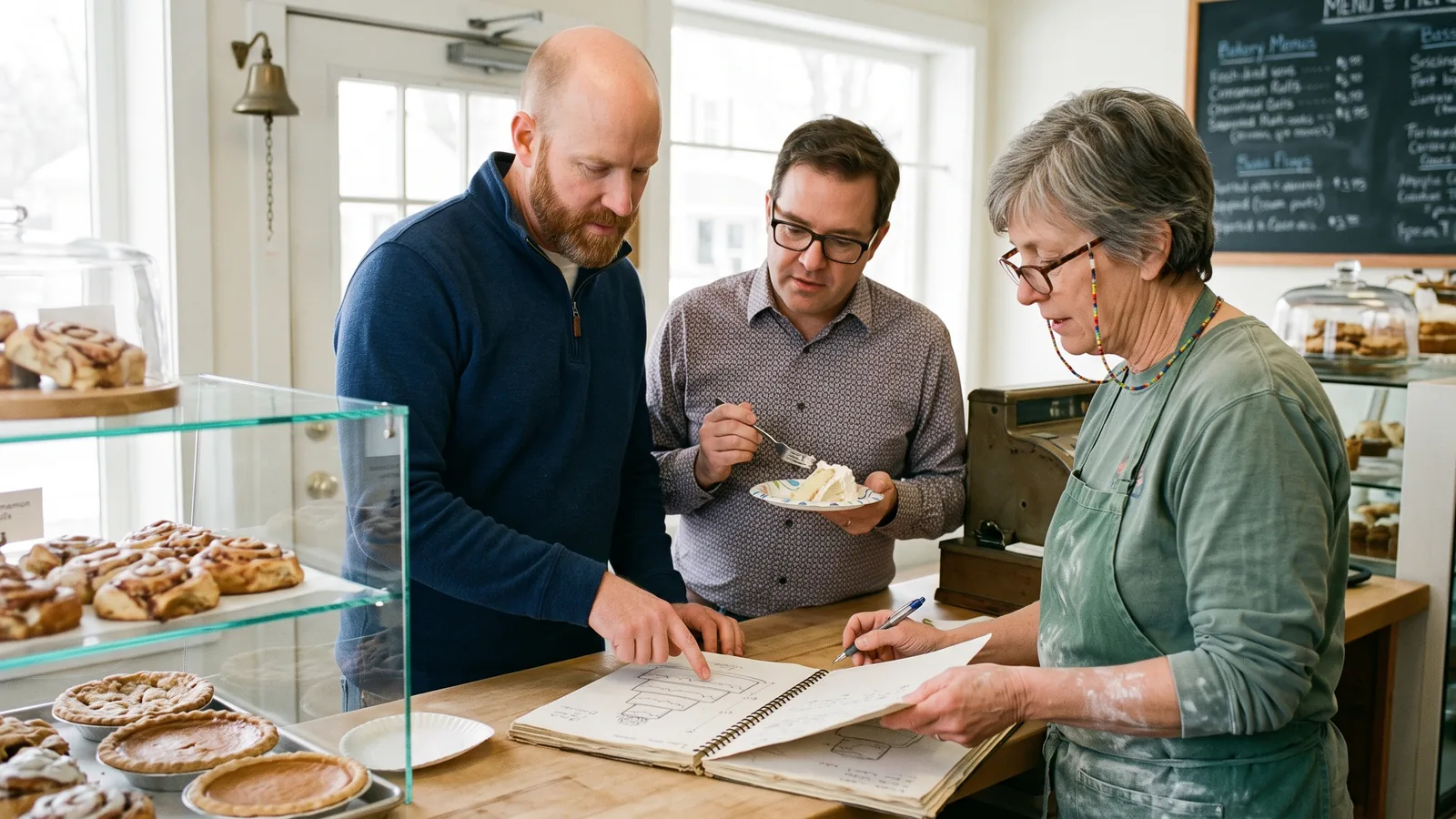
Ask whether they offer tastings and whether the fee counts toward your order.
Many bakers hold tastings for large orders like weddings. For smaller cakes, some sell sample boxes or have flavors available by the slice.
3. They're clear about lead times
Popular bakers can book up well in advance, especially for weddings and during graduation and holiday seasons.
Ask how far ahead they need your order, when they need final details and whether they take rush orders.
4. They explain their pricing
Custom cakes are commonly priced per serving, with the base price changing by flavor and filling.
Design complexity adds cost: hand-piped detail, sugar flowers, sculpted shapes, extra tiers, fondant work and custom toppers all take time.
Ask for a written quote that shows what's included, so you can compare bakers fairly.
5. Their terms are in writing
Ask about the deposit, when the balance is due, what happens if you cancel or change the date and what happens if they have to cancel.
A professional baker will have clear answers and put them in writing.

Then look for signs of genuine inclusivity
A cake is personal. You shouldn't have to wonder whether the baker is comfortable making it.
Their portfolio shows every kind of celebration
Look for wedding cakes with two brides or two grooms, cakes for gender transitions and name changes, quinceañeras, bar and bat mitzvahs, Eid and Diwali celebrations, Lunar New Year, adoption days and blended-family weddings.
Their language welcomes you
Does the website say "couples" rather than only "bride and groom"? Does the order form let you write in the names and details that fit your celebration?
They take dietary needs seriously
Look for bakers who list vegan, gluten-free, dairy-free or egg-free options and explain how they make them.
If you need halal or kosher, ask specifically about certification (more on that below).
They handle accessibility and language
Can you order by email or text if phone calls are hard? Is the pickup location accessible? Can someone help you in the language you're most comfortable in?
These things matter for older customers, disabled customers and families who speak languages other than English at home.
Ask directly and early
The most reliable way to know is to ask before you pay anything.
"We're planning a wedding for two women. Is that something you'd love to make?"
"This cake is for my kid's transition celebration and will say their new name. Are you comfortable with that?"
A welcoming baker will answer warmly and right away. If the answer is hesitant, you've learned what you needed to know, and you still have time to go elsewhere.
A few things that would make us pause
They won't show you finished work. Inspiration photos from other bakers aren't a portfolio.
There's no written quote or agreement. A handshake deal on a wedding cake is a risk you don't need.
They promise allergen-free without explaining how. Honest bakers tell you what they can and can't control.
They hesitate when you describe your celebration. Better to find out now than a week before the event.
They're vague about delivery. If you can't get a clear answer about who delivers, when and who sets up, keep asking or keep looking.
Allergens and cross-contact
If someone eating the cake has a food allergy, tell the baker at the very first conversation.
The FDA recognizes nine major food allergens: milk, eggs, fish, crustacean shellfish, tree nuts, peanuts, wheat, soybeans and sesame. Cakes often include several of them.
The bigger issue is cross-contact, when an allergen ends up in food that isn't supposed to contain it. In a kitchen where flour, nuts, butter and eggs are everywhere, that can happen through shared equipment, surfaces or even flour dust.
Many small bakeries simply can't guarantee a cake is completely free of an allergen, even when the recipe doesn't include it. A good baker will tell you that plainly.
Ask what's in every component (cake, filling, frosting, decorations), what else is made in the same kitchen and what steps they take to separate ingredients.
For a severe allergy, you may be better served by a dedicated allergen-free bakery. This is general information, not medical advice. If you're unsure what's safe, check with the person's doctor or allergist.
Dietary and religious needs
Vegan. Ask about every ingredient, including butter, eggs, milk, honey and gelatin. Some packaged ingredients carry a "Certified Vegan" logo from Vegan Action, which means no animal ingredients and no animal testing.
Gluten-free. For packaged foods, the FDA allows the "gluten-free" label only when the food contains less than 20 parts per million of gluten. That rule doesn't directly cover bakery menus, though the FDA recommends restaurants follow the same standard. Ask how the baker avoids cross-contact with wheat flour.
Kosher. Kosher certification means a certifying agency has checked the ingredients and process against Jewish dietary law, often with ongoing supervision. A baker who uses kosher ingredients is not the same as a certified kosher bakery. If you need certification, ask which agency certifies them.
Halal. Halal certification means a certifying body has audited the ingredients and process against its halal standard. Ask about ingredients like gelatin and alcohol-based flavorings, and ask which body certifies the bakery if certification matters to you.
When you need a certification, ask to see it. Don't assume.
Home bakers and cottage food laws
Many wonderful custom cakes come from home kitchens.
Most states have cottage food laws that let people sell certain homemade foods without a commercial kitchen. The rules vary a lot by state. They commonly limit what can be sold (often foods that don't need refrigeration), how it can be sold, how much can be sold and what the label must say.
That matters for cakes. In some states, a home baker may not be allowed to sell cakes with fillings or frostings that need refrigeration, like cream cheese frosting or fresh fruit.
Ask a home baker whether they operate under your state's cottage food law or have a licensed kitchen. Your state's agriculture or health department website explains the local rules. This is general information, not legal advice.
Delivery and setup
For a tiered or large cake, delivery is usually worth paying for.
Ask what delivery costs, what time they'll arrive and whether they set up the cake on the table. Confirm who at the venue will receive it and whether the venue charges a cake-cutting fee.
If you're picking it up yourself, ask how to carry it, how long it can sit out and whether it needs to be refrigerated.
Get it all in writing
Before you pay a deposit, make sure your order confirmation includes:
- Date, time and address for pickup or delivery
- Number of servings, tiers, flavors, fillings and frosting
- Design details, colors and any reference photos
- Names, messages and spellings exactly as they should appear
- Allergen and dietary notes
- Total price, deposit, balance due date and cancellation terms
Where to look
| Source | What it gives you |
|---|---|
| Bakers' own websites and social media | Portfolios, flavors and ordering details |
| Friends, family and coworkers | Honest reviews from people who've ordered |
| Wedding and event venues | Bakers they know deliver reliably |
| Farmers markets | A chance to meet home and small bakers and taste their work |
| Inclusive business directories | Bakeries listed with a source you can check |
| Local community centers and faith communities | Bakers who already celebrate your traditions |
A listing is a lead, not a promise. Ask your questions before you book.
A simple checklist
Before you choose a baker, ask yourself:
- Have I seen finished cakes similar to what I want?
- Did I taste their cake, or at least read reviews about flavor?
- Do I understand the price, deposit and cancellation terms?
- Do they know about every allergy and dietary need?
- If I need a certification, have I seen it?
- Is delivery and setup confirmed?
- Did they welcome my celebration without hesitation?
- Is everything in writing, including the spelling of every name?
If the answers are yes, you're ready to order.
FAQ
How far in advance should I order a custom cake?
It depends on the baker, the season and the size of the order. Wedding cakes are often booked months ahead, while a birthday cake may need a couple of weeks. Ask each baker for their lead time as soon as you have a date, since small bakeries can only take so many orders a week.
How are custom cakes usually priced?
Many bakers price custom cakes per serving, with the base price varying by flavor and filling. Design work, like sugar flowers, hand piping, sculpted shapes and extra tiers, adds to the cost, as do delivery and setup. Ask for an itemized written quote so you can compare bakers fairly.
Can a bakery guarantee a cake is allergen-free?
Often not. Many bakeries share equipment and space, so cross-contact with allergens like wheat, nuts, milk or eggs is possible even when a recipe doesn't include them. Ask exactly what steps they take, and for a severe allergy consider a dedicated allergen-free bakery.
Is it safe to order from a home baker?
Many home bakers do excellent, careful work. Most states allow home baking for sale under cottage food laws, but the rules vary by state and often limit which foods can be sold. Ask whether they operate under your state's law or a licensed kitchen, and check your state's rules if you're unsure.
What does a kosher or halal certification actually mean?
It means an independent certifying agency has reviewed the ingredients and process against its religious standard and typically checks back over time. Using kosher or halal ingredients isn't the same thing. If certification matters to you, ask which agency certifies the bakery and ask to see the certificate.
How do I know a baker will make a cake for my wedding or celebration?
Ask directly and early, before you pay a deposit. Describe your celebration plainly, such as a wedding for two men or a cake for a transition celebration, and see how they respond. Look for portfolios and reviews that already include families like yours.
Find bakeries near you
And if you know a great one we should add:
Sources
- FDA, food allergies, the nine major food allergens and cross-contact: https://www.fda.gov/food/nutrition-food-labeling-and-critical-foods/food-allergies
- FDA, gluten-free labeling rule Q&A (applies to packaged foods; recommends restaurants follow the definition): https://www.fda.gov/food/nutrition-food-labeling-and-critical-foods/questions-and-answers-gluten-free-food-labeling-final-rule
- FDA, gluten and food labeling (less than 20 ppm): https://www.fda.gov/food/nutrition-education-resources-materials/gluten-and-food-labeling
- Farm-to-Consumer Legal Defense Fund, cottage foods map and chart by state: https://www.farmtoconsumer.org/cottage-foods-map/
- Institute for Justice, cottage food survey and state-by-state homemade food laws: https://ij.org/report/cottage-foods-survey/
- OK Kosher, what kosher supervision means: https://www.ok.org/consumers/kosher-basics/kosher-supervision/
- OU Kosher, what a mashgiach does: https://oukosher.org/blog/articles/what-is-a-mashgiach/
- ANAB, accreditation of IFANCA as a halal certifier: https://anab.ansi.org/anab-accredits-ifanca-to-certify-halal-products/
- Vegan Action, Certified Vegan logo consumer information: https://vegan.org/certification/consumer-info
Keep reading
Own or know an inclusive business?
List it free so people can discover it year-round — with a source you control.
List your business