Minority-Owned Businesses
Fall 2026 Farmers Markets: Finding Diverse-Owned Food Vendors Near You
Updated July 26, 2026 10 min readShopping Guide
On this page (11 sections)
- Quick answer
- Why this matters in 2026
- How do I find farmers markets near me this fall?
- How do I identify diverse-owned stalls respectfully?
- What is in season at fall markets?
- What questions should I ask vendors?
- How do I use SNAP, EBT, and Double Up Food Bucks?
- How do I turn a market visit into ongoing support?
- Common mistakes to avoid
- FAQ
- Sources
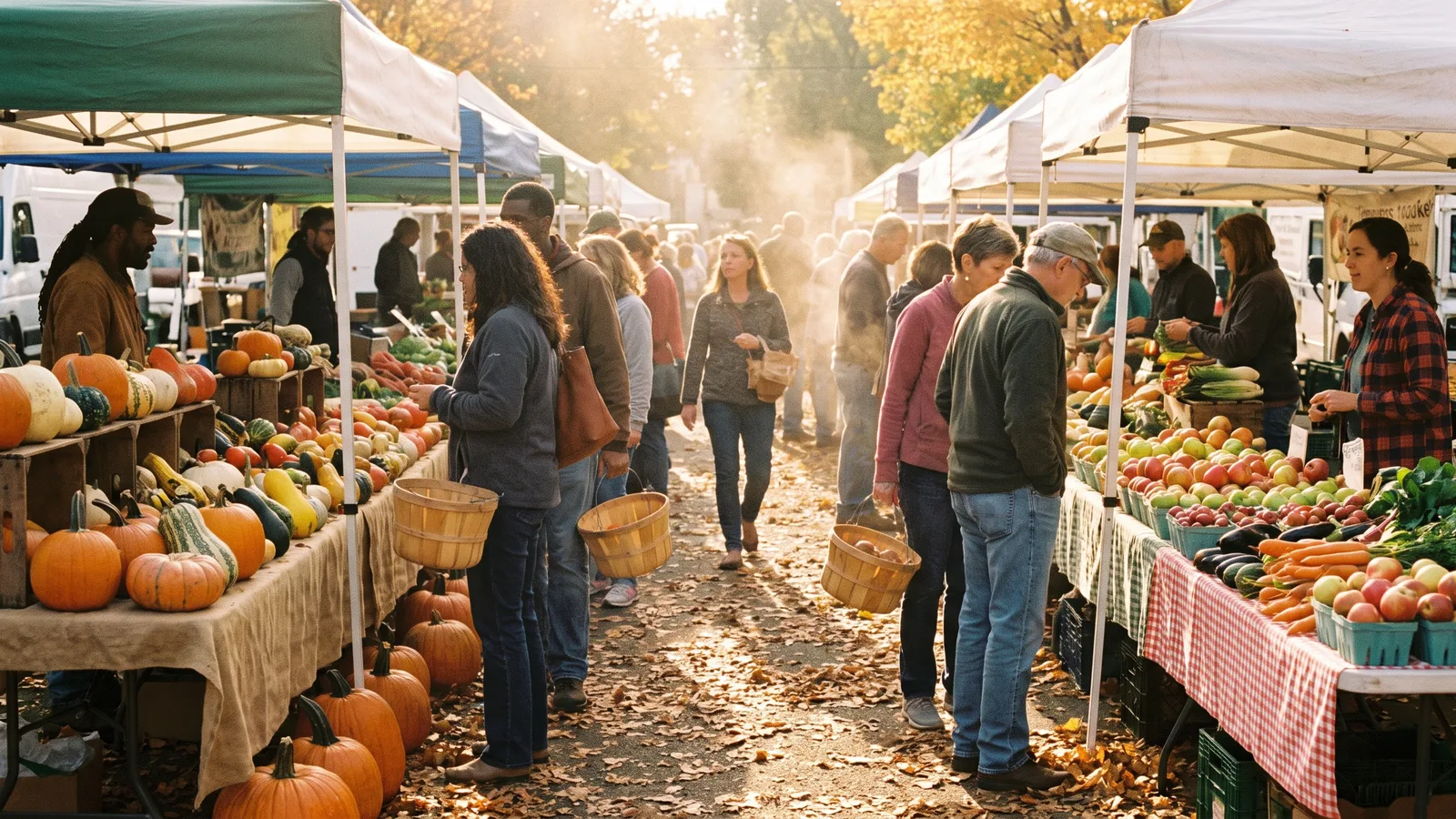
Fall is the season when farmers markets are at their fullest. The summer crush of tomatoes and stone fruit gives way to a deeper, sturdier harvest, and many markets extend their hours through October or move indoors for winter. It is also the season when a single Saturday visit can put real money into the hands of the people who grew or made your food, with almost no markup taken out along the way.
This guide is about doing that on purpose. Farmers markets are one of the few places where you can meet an immigrant farmer, a Black-owned bakery, a Latino family's salsa business, or a refugee-run produce stall face to face, hand them cash or tap a card, and know that most of what you paid stays with them. Below you will find how to locate markets near you, how to identify diverse-owned stalls respectfully, what is worth buying in fall, the questions that actually matter, how to stretch a SNAP or EBT budget with programs like Double Up Food Bucks, and how to turn one good visit into steady, ongoing support.
Quick answer
- Use USDA's Local Food Directory or your state and city market associations to find markets, then check hours because many shift to fall or indoor schedules after Labor Day.
- Diverse-owned stalls are not always labeled. Look for market vendor directories, "meet the farmer" signage, and market-run maps rather than guessing by appearance.
- Fall staples are apples, pears, winter squash, sweet potatoes, greens, root vegetables, cranberries, and late peppers, so plan meals around what stores well.
- Ask vendors how they grow, where their farm is, and what they would cook this week. These questions build a real relationship and reveal the story behind the stand.
- SNAP and EBT are accepted at thousands of markets. Look for the market information booth to swap benefits for tokens.
- Double Up Food Bucks and similar programs match SNAP spending on produce, often dollar for dollar up to a daily cap, which effectively doubles your fruit and vegetable budget.
- Bring small bills, reusable bags, and a cooler for the drive home so you can buy more perishable items with confidence.
- Turn a one-time visit into ongoing support by joining a CSA, setting a standing weekly order, or following vendors who sell midweek elsewhere.
Why this matters in 2026
Farmers markets keep a much larger share of your dollar with the grower than a conventional grocery chain does. USDA research on local and regional food systems has long found that direct-to-consumer sales let farmers capture nearly the full retail price rather than the small fraction that typically flows back through wholesale and distribution. For a small or first-generation farmer, that difference is often what keeps the operation alive from one season to the next.
The stakes are higher for diverse-owned food businesses specifically. Farming in the United States remains overwhelmingly white-owned, and USDA's Census of Agriculture has documented how few farms are operated by Black, Latino, Native, and Asian producers, and how much smaller those farms tend to be. Immigrant and refugee food entrepreneurs, meanwhile, frequently start at markets because the barrier to entry is a table and a permit rather than a storefront lease. When you choose these vendors deliberately, you are not just buying dinner. You are helping widen who gets to succeed in a notoriously narrow industry.
There is also a practical, personal payoff. Fall produce bought at peak ripeness from a nearby farm simply tastes better and lasts longer than produce trucked across a continent. Supporting diverse-owned vendors and eating well are the same act here, which is what makes markets such an easy place to start.
How do I find farmers markets near me this fall?
Start with a directory built for the job. USDA's Local Food Directory lets you search farmers markets, CSAs, and on-farm stands by location. Most states also run a department of agriculture directory, and many cities have a market association with a single page listing every neighborhood market and its season.
Fall scheduling is the catch. After Labor Day, outdoor markets often trim their days, shorten their hours, or announce a final date before an indoor winter market takes over. Confirm the current schedule before you drive out.
| Where to look | What it gives you |
|---|---|
| USDA Local Food Directory | Searchable national map of markets, CSAs, and farm stands |
| State department of agriculture | Official seasonal market lists, often with vendor details |
| City or regional market association | Neighborhood markets, hours, and fall or winter changes |
| Our directory | Diverse-owned food businesses you can look up before you go |
| Market social media pages | Weekly vendor lineups and produce updates |
How do I identify diverse-owned stalls respectfully?
The honest answer is that you cannot reliably tell who owns a business by looking at the person behind the table, and trying to is a mistake. Ownership, heritage, and the story of a farm are not visible on sight. So rely on information the vendor has chosen to share instead of your own assumptions.
Many markets publish a vendor directory or a "meet your farmers" board that describes each business in its own words. Some vendors mark their stalls as women-owned, veteran-owned, or family-run, or describe the country their recipes come from. Our directory is another way to research diverse-owned food businesses before market day so you arrive already knowing who you want to visit. When in doubt, simply shop, ask friendly questions, and let people tell you what they want you to know.
What is in season at fall markets?
Fall rewards cooks who like to plan. Much of the harvest stores well, so you can buy generously and eat through the week without waste. The exact timing shifts by region, and northern markets wind down earlier than southern ones, but the categories below are dependable across most of the country from September through November.
| Category | Fall picks | Why buy now |
|---|---|---|
| Tree fruit | Apples, pears, late plums | Peak flavor and long fridge life |
| Winter squash | Butternut, acorn, delicata, pumpkin | Stores for weeks at room temperature |
| Roots and tubers | Sweet potatoes, carrots, beets, turnips | Cheap, filling, and keep well |
| Hardy greens | Kale, collards, chard, spinach | Sweeter after the first cold snap |
| Alliums | Onions, garlic, leeks, shallots | Flavor base for cold-weather cooking |
| Seasonal extras | Cranberries, late peppers, cauliflower | Short windows, worth grabbing early |
What questions should I ask vendors?
A good question does two things. It helps you shop smarter, and it opens a real conversation that makes you a regular rather than a stranger. Vendors remember the customers who care about their work.
Try any of these:
- "Where is your farm, and did you grow this yourself?"
- "How do you grow it? Are you certified organic, or low-spray, or something else?"
- "What is best this week, and what would you cook with it?"
- "Do you sell anywhere else during the week, or offer a CSA?"
- "What is the story behind your business?"
That last question is optional, not an interrogation. Ask it warmly, and let the vendor decide how much to share.
How do I use SNAP, EBT, and Double Up Food Bucks?
Thousands of farmers markets accept SNAP benefits, and using them is straightforward once you know the routine. Go to the market's information or manager booth, tell them how much you want to spend, and they will run your EBT card and hand you tokens or a paper scrip that vendors accept like cash. You spend the tokens at any SNAP-eligible stall, and unused tokens usually stay valid for future visits.
The multiplier is where it gets powerful. Double Up Food Bucks, run by the Fair Food Network and partner organizations across many states, matches SNAP spending on fruits and vegetables, commonly dollar for dollar up to a daily cap. Spend twenty SNAP dollars on produce and you may walk away with forty dollars of fruit and vegetables. Similar match programs operate under other names depending on your state, so ask at the booth what incentive is offered where you shop.
| Program | What it does | How to use it |
|---|---|---|
| SNAP or EBT at market | Buy food with benefits | Swap benefits for tokens at the market booth |
| Double Up Food Bucks | Matches SNAP spent on produce, often up to a daily cap | Ask the booth; match is added as extra tokens |
| WIC and Senior FMNP | Vouchers for eligible produce | Check eligibility with your state agency |
How do I turn a market visit into ongoing support?
One great Saturday is good. A standing relationship is transformative for a small vendor, because predictable income is what lets a farmer plant with confidence or a maker scale up. The move is to convert a one-time purchase into something repeatable.
Join a CSA if a farm you liked offers one, which means you prepay for a weekly share of the harvest and pick it up through the season. Set a standing order with a baker or specialty vendor so they set aside your loaf or your jars each week. Follow vendors online to learn where they sell midweek, and tell your friends, because a personal referral is worth more than any ad. If you want to keep track of the diverse-owned food businesses you discover, you can look them up and revisit them in our directory between market trips.
Common mistakes to avoid
| Mistake | Why it hurts | Do this instead |
|---|---|---|
| Assuming ownership by appearance | Inaccurate and can feel othering | Read vendor directories and ask open questions |
| Showing up without checking hours | Fall schedules change after Labor Day | Confirm the current season and time before you go |
| Only carrying a card | Some small stalls are cash only | Bring small bills plus your card |
| Skipping the info booth | You miss SNAP tokens and match programs | Visit the booth first if you use benefits |
| Buying once and never returning | Small vendors need steady income | Join a CSA or set a standing order |
| Haggling hard on price | Margins are already thin | Pay the asking price and tip generously |
FAQ
Are farmers market prices higher than the grocery store?
Some items cost more and some cost less, but you are usually paying for peak freshness and near-full value going to the grower. With a SNAP match program, produce can actually be cheaper than at a chain store.
How do I know a vendor is really diverse-owned?
Rely on what the business chooses to share through market directories, signage, or a listing in our directory, rather than guessing. If you are curious, ask about the story behind the business in a friendly way.
Can I use SNAP or EBT at any farmers market?
Not every market, but thousands do. Look for SNAP or EBT signage, or ask at the information booth, which is where you exchange benefits for spending tokens.
What is Double Up Food Bucks?
It is a program that matches SNAP dollars spent on fruits and vegetables, often dollar for dollar up to a daily cap, effectively doubling your produce budget. Similar programs run under different names by state.
What should I buy first when I get there?
Do a quick lap to see everything, then buy the most perishable and popular items early, since greens, berries, and specialty baked goods sell out. Sturdy squash and roots can wait until the end.
How can I keep supporting a vendor after the market closes for winter?
Ask whether they run a CSA, sell online, or stock a local shop. Many farms offer winter shares of storage crops, and many makers ship or deliver year round.
Is it rude to just browse and ask questions without buying?
No. Vendors welcome curiosity, and a warm conversation today often turns into a loyal customer next week. Buying even one small thing is a kind way to say thank you for their time.
Sources
- USDA Local Food Directories (farmers markets, CSAs, on-farm markets): https://www.usdalocalfoodportal.com/
- USDA Agricultural Marketing Service, National Farmers Market Directory: https://www.ams.usda.gov/local-food-directories/farmersmarkets
- USDA Census of Agriculture, producer demographics: https://www.nass.usda.gov/AgCensus/
- USDA SNAP at farmers markets: https://www.fns.usda.gov/snap/farmers-markets
- Fair Food Network, Double Up Food Bucks: https://fairfoodnetwork.org/projects/double-up-food-bucks/
- USDA Seasonal Produce Guide: https://www.myplate.gov/eat-healthy/seasonal
- USDA WIC and Senior Farmers Market Nutrition Programs: https://www.fns.usda.gov/fmnp
Keep reading
Own or know an inclusive business?
List it free so people can discover it year-round — with a source you control.
List your business