Minority-Owned Businesses
Native and Indigenous-Owned Businesses to Support in 2026
Updated July 26, 2026 10 min readShopping Guide
On this page (10 sections)
- Quick answer
- Why this matters in 2026
- How do you find and verify Native-owned businesses?
- How do you tell genuine Native-made from "Native-inspired"?
- What does the law say about buying Native art?
- Which categories are full of great Native-owned businesses?
- How do you support Native businesses all year, not just in November?
- Common mistakes to avoid
- FAQ
- Sources
Supporting Native and Indigenous-owned businesses is one of the clearest ways to put your dollars behind economic self-determination. When you buy directly from a Native maker, a tribal enterprise, or an Indigenous-owned company, you are paying a fair price for good work and keeping that value inside the community that created it. Done well, it is also an act of respect, because it means choosing the real thing over an imitation that borrows Native culture without benefiting a single Native person.
This guide is written for consumers and allies who want to shop thoughtfully. You will learn how to find and verify Native ownership, how to tell genuine Native-made goods from "Native-inspired" knockoffs, which categories are full of outstanding Native businesses, what the law actually requires when you buy Native art, and how to make your support a year-round habit rather than a November gesture. The through-line is simple: buy authentic, buy direct, and keep buying.
Quick answer
- Native-owned means a business is owned by an enrolled member of a federally or state-recognized tribe, or by a tribal nation itself.
- Verify ownership through the business's own description, tribal affiliation, Native business certifications, and reputable Native marketplaces.
- Respect tribal sovereignty. A tribal enterprise is owned by a sovereign nation, not an individual, and that is a strength.
- "Native-inspired" is not the same as Native-made. The first is often appropriation, the second supports real Native livelihoods.
- Under the federal Indian Arts and Crafts Act, it is illegal to market goods as Native-made when they are not.
- Native founders thrive in art, food, beauty and skincare, fashion, outdoor gear, and many other categories.
- When buying Native art, ask about the artist and tribal affiliation, and get documentation for higher-value pieces.
- Buy year-round, not only during Native American Heritage Month in November.
- Certifications from groups like the National Center for American Indian Enterprise Development can help larger buyers verify ownership.
- Directories such as our directory let you browse Native-owned businesses by category and location.
Why this matters in 2026
Native-owned businesses are a growing and undercounted part of the American economy. The U.S. Census Bureau's Annual Business Survey identifies tens of thousands of employer businesses owned by American Indian and Alaska Native individuals, and that figure does not fully capture the many sole proprietors, artists, and tribal enterprises that anchor local economies. Each of those businesses represents jobs, skills, and revenue that stay closer to home, which is why consumer demand matters so directly here.
Two problems make your choices consequential. The first is undercapitalization. The U.S. Small Business Administration and Native business advocates have long documented that Native entrepreneurs, particularly those on tribal lands, face added barriers to financing and market access. Steady customers help bridge that gap. The second is imitation. A large volume of goods sold as "Native" or "Native-inspired" is produced with no Native involvement at all, diverting money that buyers intend to send to Native communities. That is the gap the Indian Arts and Crafts Act was written to close.
The National Center for American Indian Enterprise Development (NCAIED), which has supported Native business growth for decades, frames the opportunity plainly: connecting Native-owned firms with buyers, contracts, and capital strengthens entire communities. Your purchases sit at the start of that chain. Choosing authentic Native-made goods, and choosing them all year, is a small decision that adds up.
How do you find and verify Native-owned businesses?
Begin with how the business describes itself. Many Native owners name their tribal affiliation and tell the story of their enterprise directly, whether that is an individual artist citing their nation or a company noting that it is tribally owned. That self-description, paired with a real trail you can follow, is your best starting point.
From there, use channels built to surface Native businesses. Native-run marketplaces, tribal economic development offices, Native business certifications, and trust-first directories all help. Our directory lets you browse by category and location so you can find Native-owned businesses near you or in a niche you care about.
| Where to look | What it confirms | What to keep in mind |
|---|---|---|
| The business's own site and artist bio | Self-stated tribal affiliation and story | Look for a specific nation, not vague "Native" language |
| Tribal enterprise and economic development pages | Ownership by a tribal nation | These are sovereign, community-owned businesses |
| Native business certifications and NCAIED networks | Formally verified Native ownership | More common among larger firms and contractors |
| Reputable Native marketplaces | Curated, verified Native makers | Check the marketplace's own vetting standards |
| Trust-first directories such as our directory | Category and location browsing | Favor listings that name the owner's affiliation |
How do you tell genuine Native-made from "Native-inspired"?
The distinction is not a technicality. "Native-inspired," "Southwestern style," "tribal print," and "Aztec pattern" are marketing phrases that let a company evoke Native cultures while sending zero dollars to Native people. Genuine Native-made goods are created by Native artists and businesses, and the difference is exactly what your money is meant to support.
The clearest tell is specificity. Authentic sellers can name the artist and their tribal nation, describe how a piece was made, and stand behind it. Vague cultural styling with no named maker is the opposite signal. When in doubt, ask, and pay attention to whether the answer is a real person and nation or a marketing story.
| Signal | Likely genuine Native-made | Likely "Native-inspired" imitation |
|---|---|---|
| The maker | Named artist with a stated tribal affiliation | No named maker, only a brand aesthetic |
| Language used | Specific nation and technique described | "Tribal," "Aztec," "Southwestern style" |
| Provenance | Documentation available on request | No paperwork, mass-produced overseas |
| Where it is sold | Native marketplaces, artist direct, vetted shops | Generic retailers and fast-fashion listings |
| Pricing | Reflects handwork and materials | Suspiciously cheap for "handmade" |
What does the law say about buying Native art?
The Indian Arts and Crafts Act of 1990 is a federal truth-in-advertising law. It makes it illegal to offer or sell any product in a manner that falsely suggests it is Indian produced, an Indian product, or the product of a particular Indian tribe, when it is not. The Indian Arts and Crafts Board (IACB), part of the U.S. Department of the Interior, administers the law and provides guidance for consumers who want to buy authentic work.
In practice, this gives you real footing as a buyer. You can ask a seller directly whether a piece is made by a member of a specific tribe, and a legitimate seller will answer clearly. For higher-value purchases such as jewelry, pottery, or weavings, ask for written documentation of the artist and their affiliation, and keep it. If you believe a product is being misrepresented as Native-made, the IACB accepts complaints. The law protects both Native artists and honest consumers, and knowing it exists makes you a sharper shopper.
Which categories are full of great Native-owned businesses?
Native entrepreneurs work across the entire economy, and it helps to shop with range rather than a narrow expectation. Some categories have especially rich communities of Native-owned brands, often rooted in generations of craft and knowledge.
| Category | What you can buy | What to look for |
|---|---|---|
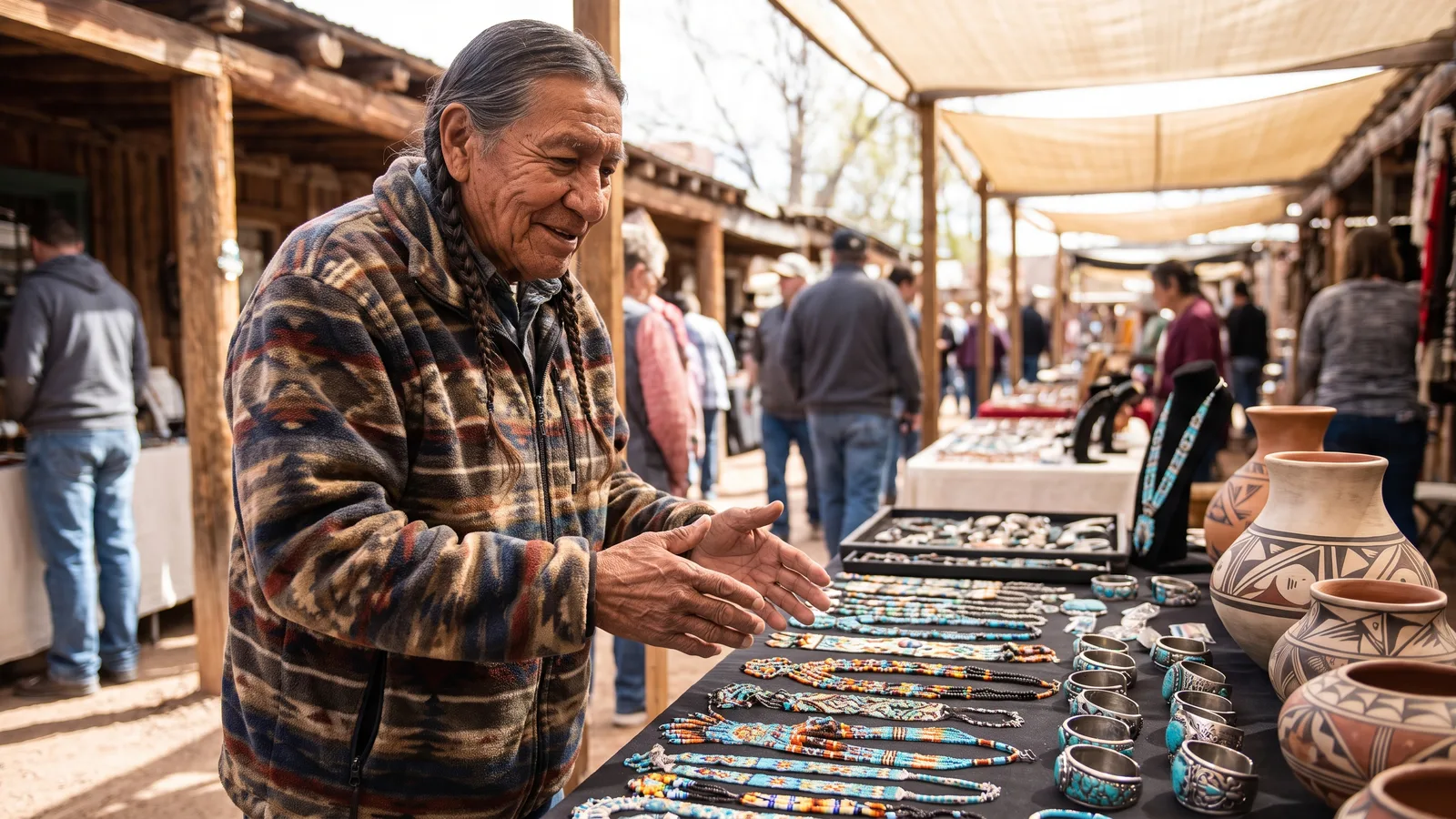
| Art and jewelry | Silverwork, turquoise, pottery, beadwork, prints | Named artist and tribal affiliation, documentation |
| Food and beverage | Wild rice, blue corn, teas, coffee, sauces, snacks | Native-owned brands and tribal food enterprises |
| Beauty and skincare | Botanical skincare, soaps, balms | Ingredient sourcing and Native ownership |
| Fashion and apparel | Contemporary clothing, ribbon skirts, accessories | Native designers, not "tribal print" retailers |
| Outdoor and home | Gear, textiles, baskets, home goods | Makers who describe materials and methods |
| Professional services | Design, consulting, construction, technology | Certifications for larger contracts |
As with any purchase, quality and value still apply. Choosing Native-made does not mean lowering your standards. It means directing your ordinary spending toward businesses whose success stays in Native communities, while still expecting excellent work.
How do you support Native businesses all year, not just in November?
Native American Heritage Month in November draws welcome attention, but a business cannot run on one month of sales. The most useful thing you can do is turn a seasonal impulse into a durable habit. Reorder pantry staples from a Native food brand, buy gifts from Native artists throughout the year, and keep a short running list of Native-owned businesses you return to.
Support beyond spending also helps. Leave honest, specific reviews. Refer friends. Follow artists and share their work with credit, letting them tell their own story rather than speaking for them. If you run a business, add Native-owned vendors to your supplier list and pay them promptly, and consider connecting with NCAIED to find certified Native firms. If you are a Native business owner yourself, listing in a trust-first directory helps customers find you. In our directory, you can add your business so year-round shoppers can reach you.
Common mistakes to avoid
| Mistake | Why it causes harm | Do this instead |
|---|---|---|
| Buying "Native-inspired" goods | Sends money away from Native people | Buy genuinely Native-made, from named makers |
| Assuming cheap "handmade" is authentic | Often mass-produced imitation | Ask about the artist and expect fair pricing |
| Treating tribal enterprises as less legitimate | Misunderstands tribal sovereignty | Recognize community ownership as a strength |
| Shopping only in November | Leaves businesses without year-round revenue | Build recurring habits across categories |
| Skipping documentation on valuable art | Leaves you exposed to misrepresentation | Get written provenance and keep it |
| Speaking for Native artists | Overrides their voice | Share their work and let them tell their story |
FAQ
What counts as a Native-owned business?
Generally, a business owned by an enrolled member of a federally or state-recognized tribe, or a tribal enterprise owned by a nation itself. For everyday shopping, the owner's stated tribal affiliation is what you rely on. For contracts, Native business certifications verify ownership formally.
How do I know Native art is authentic?
Ask who made it and their tribal nation, and expect a clear answer. Buy from Native marketplaces, directly from artists, or from vetted shops. For higher-value pieces, request written documentation. The Indian Arts and Crafts Act makes it illegal to falsely market goods as Native-made.
Is "Native-inspired" the same as Native-made?
No. "Native-inspired" describes an aesthetic and often involves no Native people at all. Native-made means the item was created by a Native artist or business. Choosing Native-made is what actually supports Native livelihoods, so treat "inspired" language as a caution flag.
What is the Indian Arts and Crafts Act?
It is a 1990 federal law that bans marketing products as Indian-made when they are not. It is administered by the Indian Arts and Crafts Board within the U.S. Department of the Interior, which also helps consumers identify authentic work and accepts complaints about misrepresentation.
Are tribal enterprises different from individually owned businesses?
Yes, and both are legitimate. A tribal enterprise is owned by a sovereign tribal nation and often reinvests profits into community services. An individually owned business is run by a tribal member. Supporting either keeps economic value within Native communities.
How can I support Native businesses year-round?
Make it routine rather than seasonal. Reorder food and household staples from Native brands, buy gifts from Native artists throughout the year, leave honest reviews, refer friends, and keep a short list of Native-owned businesses you return to across categories.
Can my company source from Native-owned vendors?
Yes. Add Native-owned firms to your supplier lists, pay invoices promptly, and connect with the National Center for American Indian Enterprise Development to find certified Native businesses. Recurring contracts provide the kind of stability that occasional purchases cannot.
Sources
- Indian Arts and Crafts Board, U.S. Department of the Interior (Indian Arts and Crafts Act): https://www.doi.gov/iacb
- Indian Arts and Crafts Act consumer guidance: https://www.doi.gov/iacb/act
- National Center for American Indian Enterprise Development (NCAIED): https://www.ncaied.org/
- U.S. Census Bureau, Annual Business Survey (business ownership by race): https://www.census.gov/programs-surveys/abs.html
- U.S. Small Business Administration, Native American-owned business resources: https://www.sba.gov/
- Minority Business Development Agency, Native American business support: https://www.mbda.gov/
Keep reading
Own or know an inclusive business?
List it free so people can discover it year-round — with a source you control.
List your business