Local City Guides
LGBTQ+ Neighborhoods in New York City: A 2026 Guide for Buyers and Renters
By Luke Updated October 5, 2026Local Guide
On this page (12 sections)
- Quick answer
- Why New York neighborhoods work differently
- The West Village and Chelsea
- Hell's Kitchen
- Harlem and northern Manhattan
- Jackson Heights, Queens
- Park Slope and Brooklyn
- Co-ops, condos and rentals: what newcomers need to know
- How to choose between neighborhoods
- Finding an agent in New York City
- FAQ
- Sources
New York City has more LGBTQ+ history per block than almost anywhere in the country. The West Village carries the history, Hell's Kitchen much of the nightlife, and some of the city's most rooted LGBTQ+ communities live in Queens, Brooklyn and northern Manhattan.
This guide is for people looking for a home, not a night out: what each neighborhood costs and suits, where to go in your first week, and the New York specifics that catch newcomers off guard, from co-op boards to broker fees.
Quick answer
- The West Village and Chelsea are the historic core of LGBTQ+ New York; much of the nightlife has moved north to Hell's Kitchen.
- Jackson Heights in Queens hosts Queens Pride, Park Slope has housed the Lesbian Herstory Archives since 1993, and Harlem's LGBTQ+ history runs back a century.
- Prices span a wide range. In August 2026, Zillow's typical home value ran from about $465,000 in Jackson Heights to about $1.88 million in the West Village.
- Co-ops usually require board approval; condos usually do not.
- The New York City Human Rights Law protects you from housing discrimination based on sexual orientation and gender identity.
- Since June 11, 2025, the FARE Act stops brokers who represent the landlord from charging their fee to tenants.
- Interview two or three agents and ask which neighborhoods they would show you and why.
Why New York neighborhoods work differently
In most American cities, "the gay neighborhood" means one place. In New York it means several, across at least three boroughs, and the subway lets many LGBTQ+ New Yorkers live in one and spend their social life in another. So ask which neighborhood gives you the home and commute you want, within easy reach of the community you care about.
About the prices. Each section gives the Zillow Home Value Index (ZHVI), Zillow's typical home value across single-family homes, condos and co-ops, for August 2026, the latest month published when we checked on October 5, 2026. Prices change every month and vary block to block; ask your agent for current sales.
The West Village and Chelsea
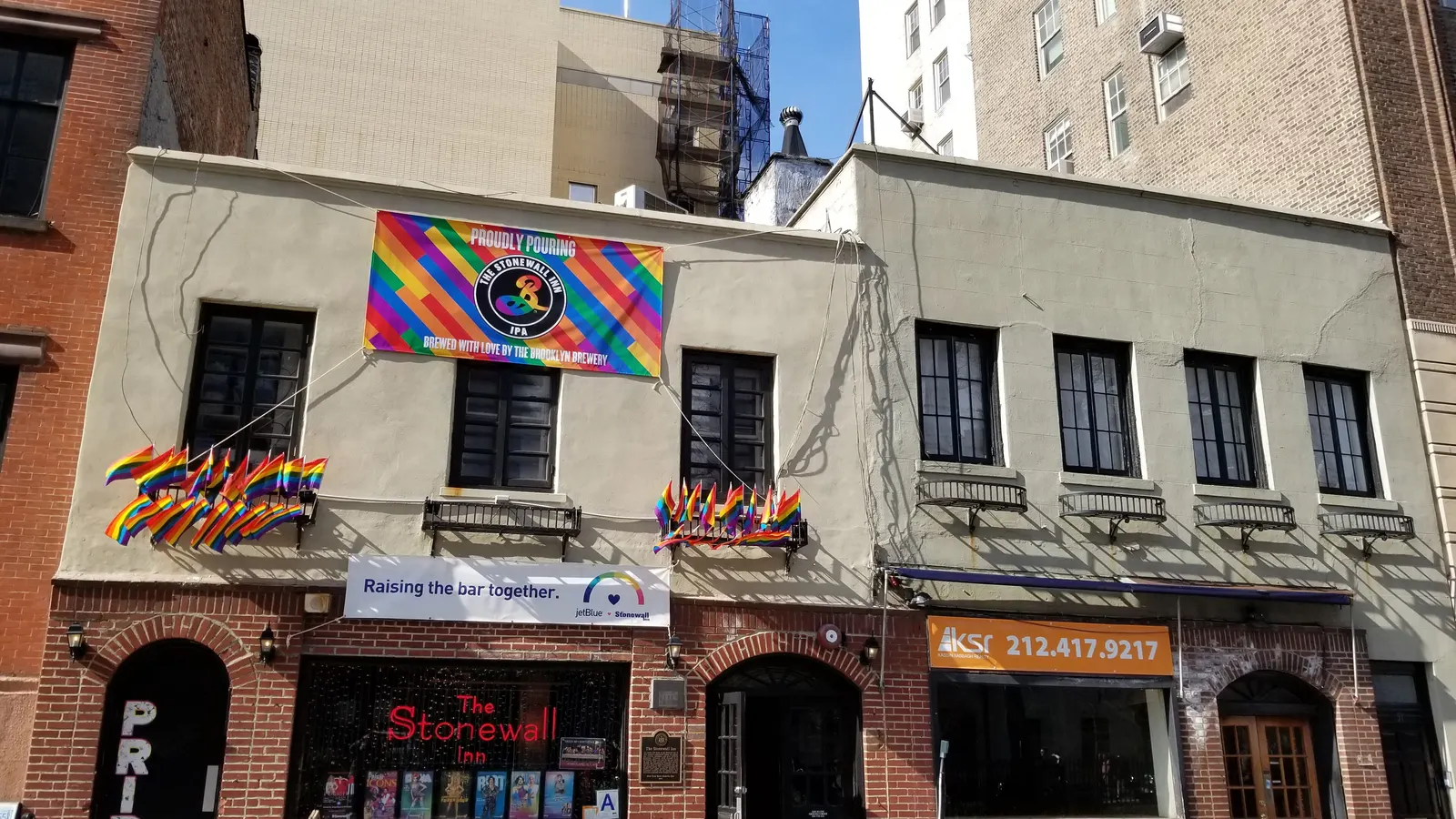
In the early morning hours of June 28, 1969, a police raid on the Stonewall Inn on Christopher Street set off the Stonewall uprising. The inn was the first LGBT site in the country listed on the National Register of Historic Places, and in 2016 it became part of Stonewall National Monument with Christopher Park across the street. The LGBT Community Center has served the community from West 13th Street since 1983.
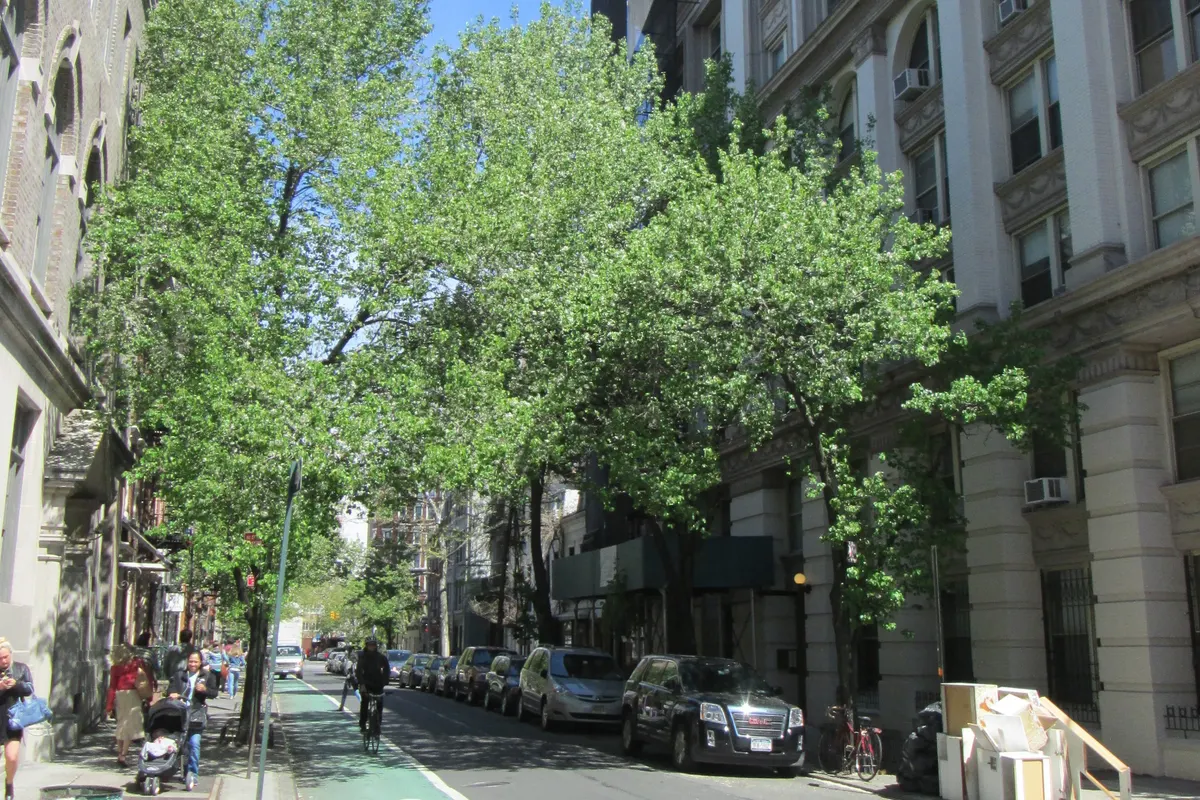
The West Village is low-rise and tree-lined, with townhouses, prewar walkups and few elevator buildings, and apartments are small and expensive: Zillow's typical home value was about $1,878,000 in August 2026. Chelsea, directly north, mixes prewar buildings with newer elevator and doorman buildings near the High Line, at about $1,614,000.
Hell's Kitchen
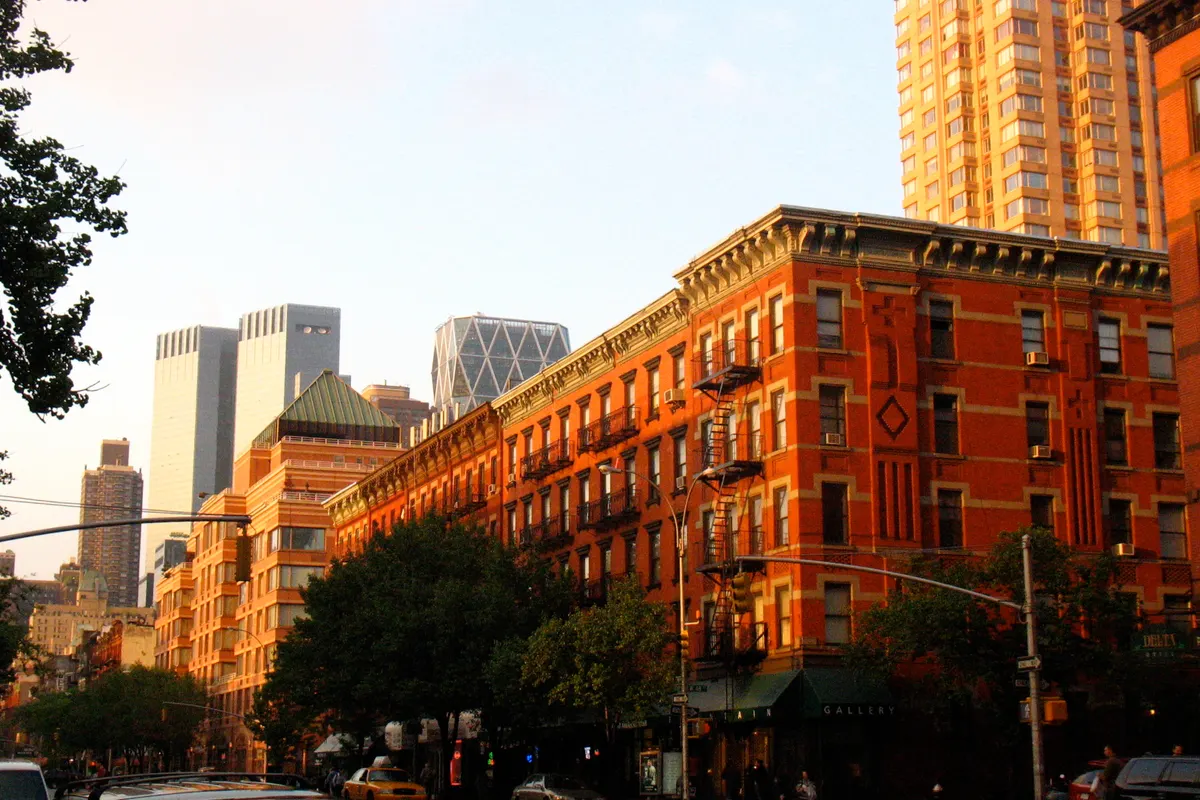
Hell's Kitchen runs up the West Side above Chelsea, between the Theater District and the Hudson River. From the mid-2000s, as Chelsea grew more expensive, much of the community's nightlife moved north to Ninth Avenue here, a shift the Village Voice's longtime nightlife columnist Michael Musto was chronicling by 2013.
Expect older walkups along the avenues and newer rental buildings toward the river. Some blocks sit right on top of the nightlife, so look at side streets and higher floors and visit at night before you sign. Zillow's typical home value was about $938,000 in August 2026.
Harlem and northern Manhattan
Harlem's LGBTQ+ history is older than Stonewall. Historian George Chauncey, whose research shaped New York Historical's 2025 exhibition "The Gay Harlem Renaissance," has shown that in the 1920s and early 1930s Harlem had more queer clubs and meeting places than Greenwich Village, and that its Hamilton Lodge Ball was the largest drag ball on the East Coast.
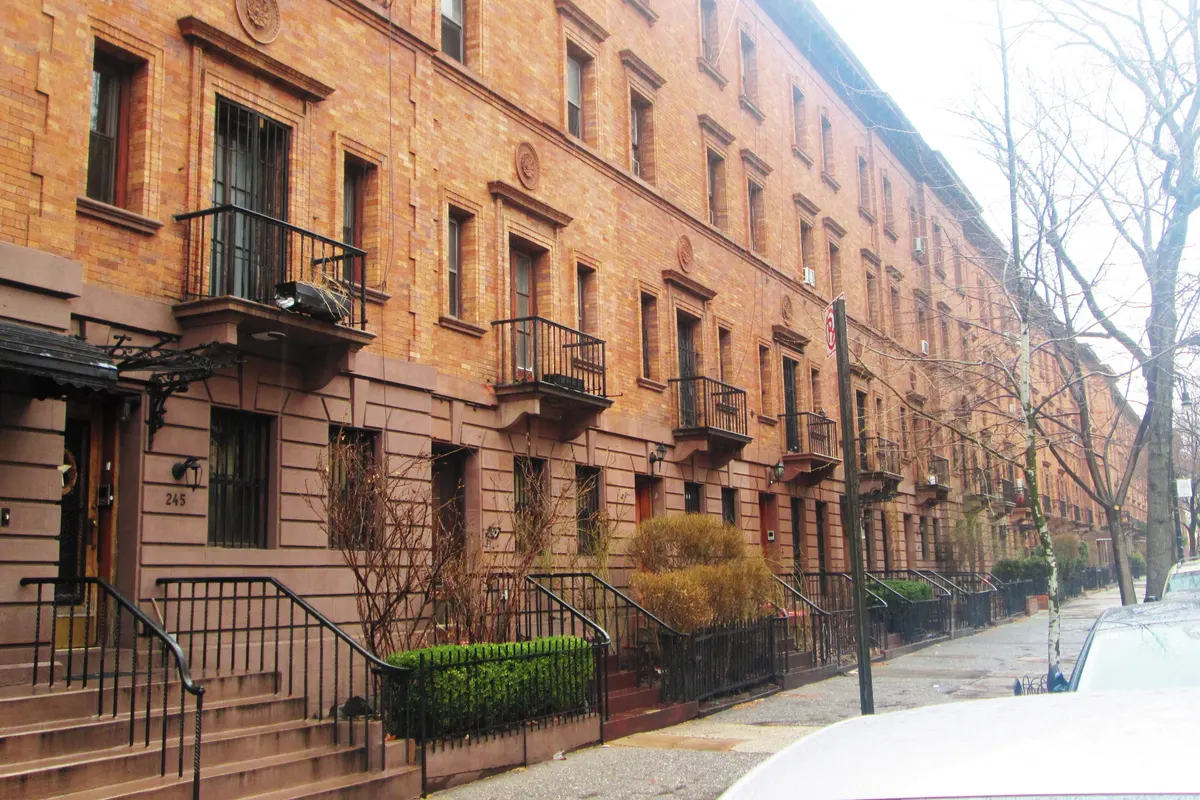
Harlem and the neighborhoods north of it offer brownstones, prewar apartment buildings and large parks. Zillow's typical home value was about $799,000 in Harlem and about $554,000 in Washington Heights in August 2026. Check whether your stop is express or local.
Jackson Heights, Queens
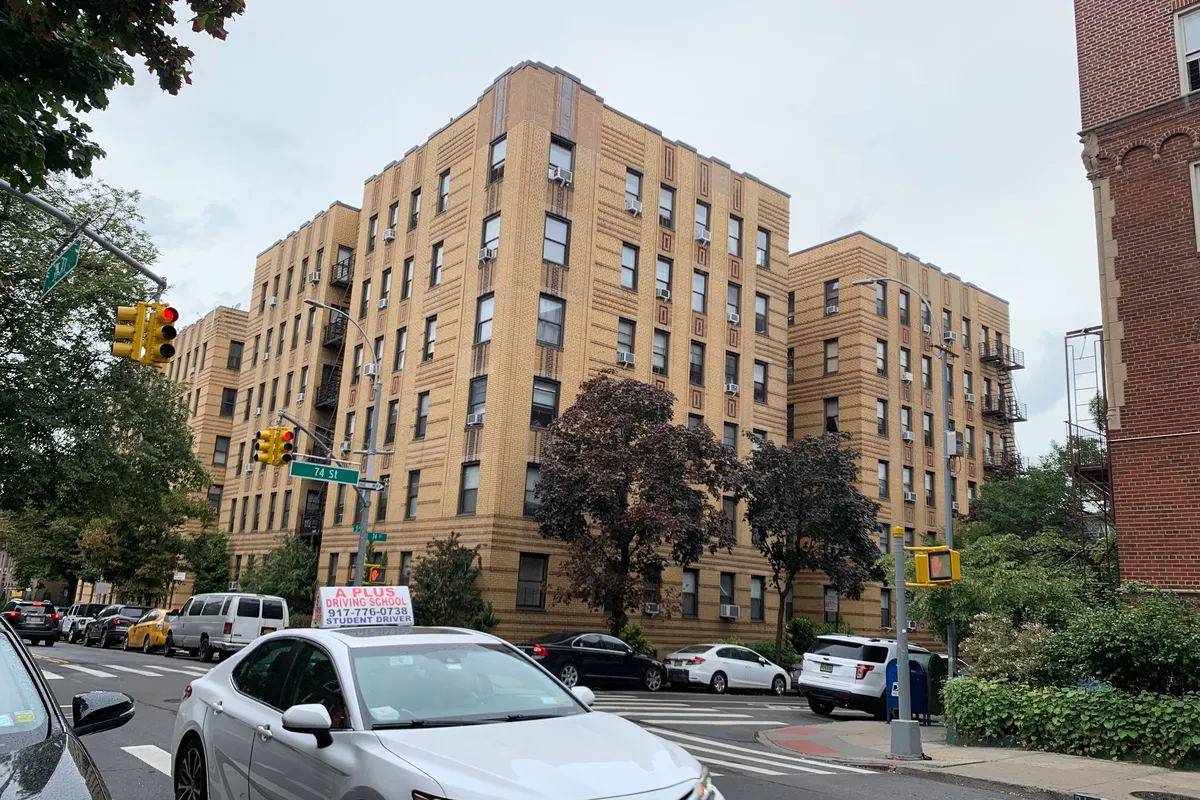
Jackson Heights has been home to one of the city's largest LGBT communities since the 1920s. In 1990, resident Julio Rivera was killed in an anti-gay attack in the P.S. 69 schoolyard. The community's response, beginning with the Justice for Julio March, made his murder the first gay hate crime tried in New York State, and in 1993 the Queens Lesbian and Gay Pride Committee founded the Queens Pride Parade, the first such event in a borough outside Manhattan. Its route passes the corner where Rivera was attacked, marked since 2000 by a street sign reading Julio Rivera Corner.
The neighborhood is known for its garden apartment buildings, many of them co-ops, and for its food, and several subway lines run to Midtown. It is the most affordable neighborhood in this guide: Zillow's typical home value was about $465,000 in August 2026.
Park Slope and Brooklyn
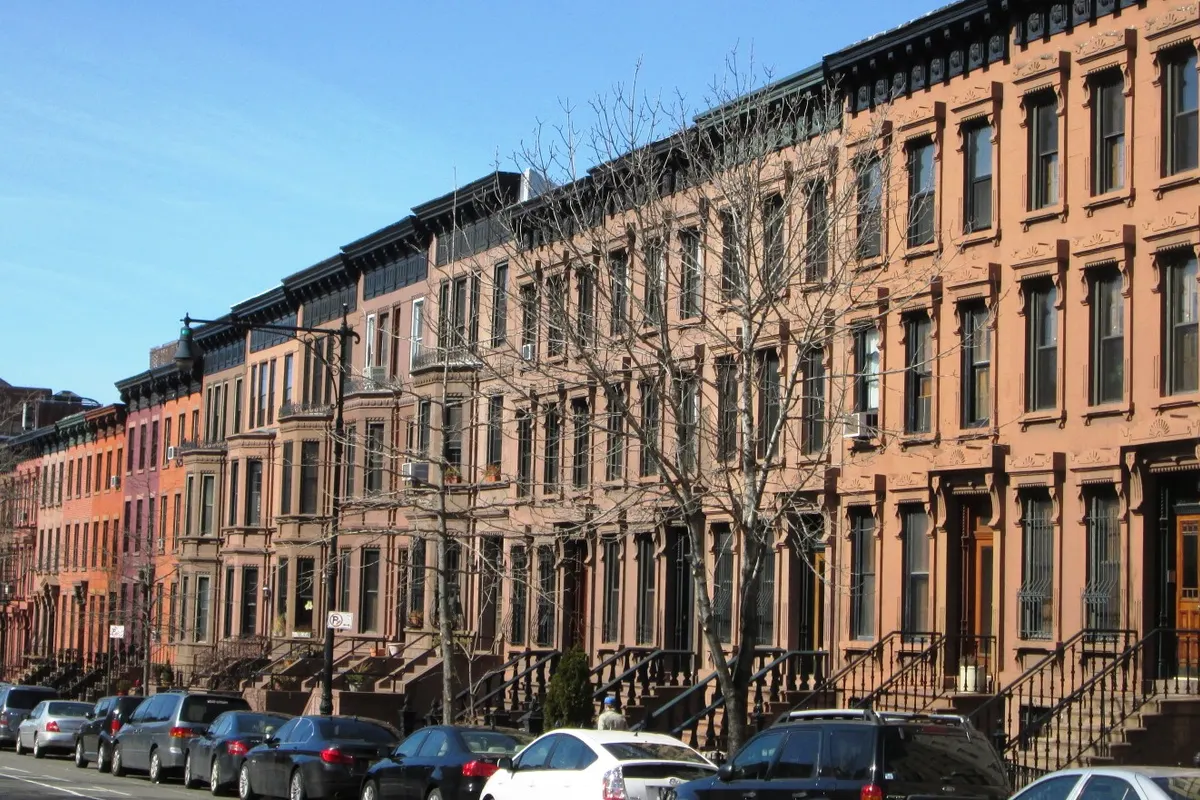
The Lesbian Herstory Archives, founded in 1974, began on the Upper West Side and reopened in a Park Slope rowhouse on 14th Street in 1993. Park Slope's brownstone blocks beside Prospect Park are among the pricier parts of Brooklyn: Zillow's typical home value was about $1,598,000 in August 2026.
In Fort Greene, Stonewall House opened in 2019 as New York's first LGBT-friendly affordable housing for elders, with 145 apartments for households with at least one person 62 or older and a SAGE center on site.
Co-ops, condos and rentals: what newcomers need to know
Co-ops. A large share of New York's for-sale apartments are co-ops. You buy shares in the corporation that owns the building, and the board usually has to approve you after a detailed application and an interview. Buildings set their own rules on down payments, subletting and pets.
Condos. Condos are owned outright, with fewer approval hurdles and more freedom to rent your unit out later, and often cost more than comparable co-ops for that reason.
Rentals. Since the FARE Act took effect on June 11, 2025, brokers who represent the landlord cannot charge their fee to the tenant, and landlords must disclose a tenant's fees before the lease is signed. You can still hire and pay your own broker.
Your rights. The New York City Human Rights Law prohibits housing discrimination based on actual or perceived sexual orientation and gender, which it defines to include gender identity and expression. It covers landlords, brokers, sellers and boards, and the NYC Commission on Human Rights takes complaints.
How to choose between neighborhoods
| If you want | Look at | Keep in mind |
|---|---|---|
| History and walkability | West Village, Chelsea | Highest prices, smaller apartments |
| Nightlife at your door | Hell's Kitchen | Noise varies block to block |
| Space and a strong community | Jackson Heights | Many co-ops; check board rules |
| Brownstones and parks | Park Slope, Harlem | Prices vary widely street to street |
| Planning for later life | Fort Greene and SAGE programs | Affordable senior housing has income limits and waitlists |
Whatever you choose, do the commute at rush hour, check the building's rules, and walk the block at night.
Finding an agent in New York City
An agent who knows which co-op boards are slow and which blocks are loud on weekends saves you time and money. Interview at least two or three, and ask:
- Which neighborhoods would you show us, and why? Do you know Queens and Brooklyn as well as Manhattan?
- How do you prepare a buyer for a co-op board package and interview?
- On rentals, are you working for us or for the landlord, and who pays your fee?
- How would you handle a landlord, seller or board that treats us unfairly?
The section below lists real estate agents in our directory who work in the five boroughs. For a fuller checklist, read our guide to finding an inclusive real estate agent, and for the national picture, our guide to LGBTQ+ neighborhoods across the US. You can also browse everything local on the New York City hub.
FAQ
What is the most LGBTQ+-friendly neighborhood in New York City?
There is no single answer. The West Village and Chelsea carry the history, Hell's Kitchen has much of the nightlife, and Jackson Heights, Park Slope and Harlem all have established LGBTQ+ communities. Budget, commute and the kind of home you want decide it.
Is it cheaper to live in Queens or Brooklyn than in the West Village?
Usually. In August 2026, Zillow's typical home value was about $465,000 in Jackson Heights and about $1.6 million in Park Slope, against about $1.88 million in the West Village. Prices vary widely within every neighborhood.
Do I have to pay a broker fee to rent an apartment in NYC?
Not when the broker works for the landlord. Since June 11, 2025, the FARE Act prohibits it. If you hire your own broker, you can agree to pay them.
Can a co-op board reject me because I am LGBTQ+?
No. The New York City Human Rights Law prohibits housing discrimination based on sexual orientation and gender, including gender identity and expression. You can file a complaint with the NYC Commission on Human Rights.
Where is the Stonewall National Monument?
In the West Village, around Christopher Park on Christopher Street, directly across from the Stonewall Inn.
Sources
- Stonewall National Monument proclamation (2016), Obama White House archives: https://obamawhitehouse.archives.gov/the-press-office/2016/06/24/presidential-proclamation-establishment-stonewall-national-monument
- National Park Service, Stonewall National Monument basic information: https://www.nps.gov/ston/planyourvisit/basicinfo.htm
- Stonewall National Monument Visitor Center: https://stonewallvisitorcenter.org/
- NYC LGBTQ Historic Sites Project, Stonewall Inn: https://www.nyclgbtsites.org/site/stonewall-inn/
- NYC LGBTQ Historic Sites Project, LGBT Community Center: https://www.nyclgbtsites.org/site/lgbt-community-center/
- NYC LGBTQ Historic Sites Project, Julio Rivera Corner: https://www.nyclgbtsites.org/site/julio-rivera-corner/
- NYC LGBTQ Historic Sites Project, Lesbian Herstory Archives: https://www.nyclgbtsites.org/site/lesbian-herstory-archives/
- Village Voice, Michael Musto, "Hell's Kitchen Is Gayer Than Ever" (2013): https://www.villagevoice.com/hells-kitchen-is-gayer-than-ever-heres-my-bar-guide/
- NYC LGBTQ Historic Sites Project, drag balls at the Imperial Lodge of Elks (Harlem Renaissance): https://www.nyclgbtsites.org/site/imperial-lodge-of-elks/
- NYC LGBTQ Historic Sites Project, starting point of the first Queens Pride Parade: https://www.nyclgbtsites.org/site/starting-point-of-the-first-queens-pride-parade/
- Amsterdam News, New York Historical's "Gay Harlem Renaissance" exhibition (2025): https://amsterdamnews.com/news/2025/12/11/ny-historical-brought-the-gay-harlem-renaissance-back-to-life/
- NYC Department of Housing Preservation and Development, Stonewall House opens in Fort Greene (2019): https://www.nyc.gov/site/hpd/news/112-19/stonewall-house-new-york-s-first-lgbt-friendly-affordable-elder-housing-opens-fort-greene
- NYC Department of Consumer and Worker Protection, FARE Act: https://www.nyc.gov/site/dca/about/FAQ-Broker-Fees.page
- Fair Housing NYC, protected classes: https://www.nyc.gov/site/fairhousing/rights-responsibilities/what-are-the-protected-classes.page
- NYC Commission on Human Rights: https://www.nyc.gov/site/cchr/
- The LGBT Community Center: https://gaycenter.org/
- Callen-Lorde Community Health Center, locations: https://callen-lorde.org/
- GMHC: https://gmhc.org/
- SAGE, centers and contact: https://www.sageusa.org/about-us/contact-us/
- New York Public Library, Schomburg Center: https://www.nypl.org/locations/schomburg
- New York Public Library, Black LGBTQ studies in the Schomburg Center's archive: https://libguides.nypl.org/BlackLGBTQStudies
- Harlem Pride: https://harlempride.org/contact/
- APICHA Community Health Center, locations: https://www.apicha.org/locations/
- Queens Pride: https://newqueenspride.org/about/
- Queens Public Library, Jackson Heights: https://www.queenslibrary.org/about-us/locations/jackson-heights/
- Lesbian Herstory Archives: https://lesbianherstoryarchives.org/
- Brooklyn Community Pride Center: https://www.lgbtbrooklyn.org/
- Zillow Research, Zillow Home Value Index (ZHVI) data, neighborhood and city series, August 2026 (checked October 5, 2026): https://www.zillow.com/research/data/
Find an agent
LGBTQ+ and ally real estate agents in New York City
Each is a published listing with a source on the record. Open a profile to see why it is listed, then interview them like you would anyone else.
Keep reading



Own or know an inclusive business?
List it free so people can discover it year-round — with a source you control.
List your business