Essay
The Strip Mall Is Better Than You Think
Richard September 25, 2026 10 min read
The Strip Mall Is Better Than You Think
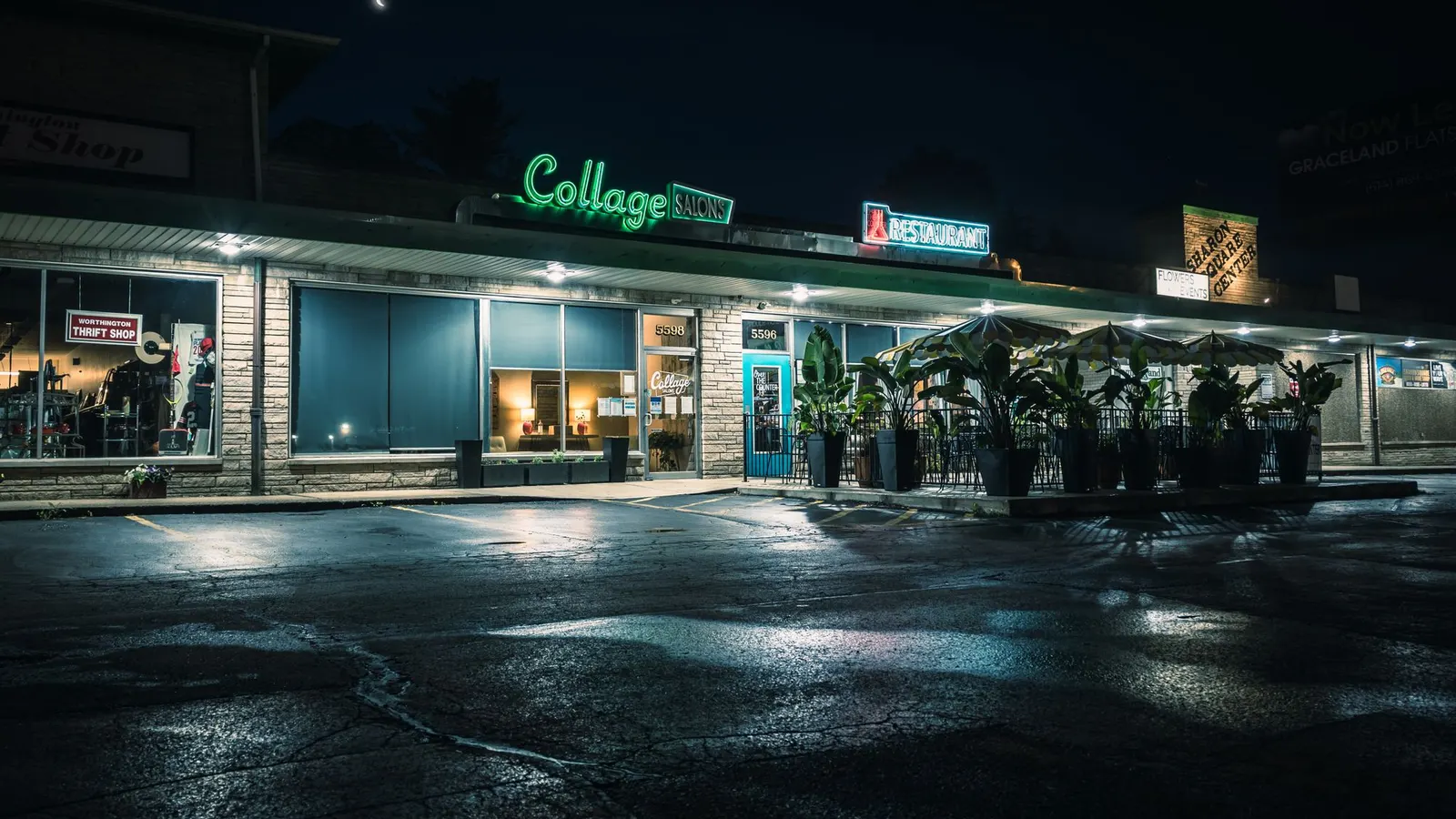
Nobody puts a strip mall on a postcard.
There is no walking tour of the one with the nail salon, the tax preparer, the pho place and the dentist. Nobody posts a sunset photo of the parking lot. When people describe a neighborhood they love, they describe brick storefronts, a main street, maybe a farmers market with string lights. They almost never describe a one-story row of units with a pylon sign out front and a lot full of Hondas.
And yet if you want to know who is actually starting businesses in America, and where they can afford to do it, the strip mall is one of the most honest buildings we have.
I have come to think the strip mall is badly underrated. Not as architecture. It is usually not beautiful, and it is not trying to be. But as a piece of economic infrastructure, as the place where a first business gets a first lease, it has done more for more kinds of owners than almost any photogenic downtown.
The least photogenic building in America
The strip mall has a short, unglamorous history.
In Los Angeles, the modern mini-mall grew out of an accident of the 1970s. When the 1973 and 1974 oil embargoes closed hundreds of gas stations, oil companies sold off the corner lots, and developers noticed they were already sitting on busy intersections, according to a Los Angeles Times history of the mini-mall. By 1985, the paper later reported, as many as 3,000 of these street-corner centers had been built in Los Angeles County alone.
People hated them. The same coverage describes a mid-1980s backlash against what many considered revolting architecture and overbuilding. Cities passed rules to slow them down.
But the same reporting noticed who was moving in. The mini-malls, the Times wrote in 1997, were a refuge for independent shop owners and immigrant entrepreneurs whose pockets were too shallow for a big mall. Architectural historian Alan Hess put it more simply: they are "often mom-and-pop operations."
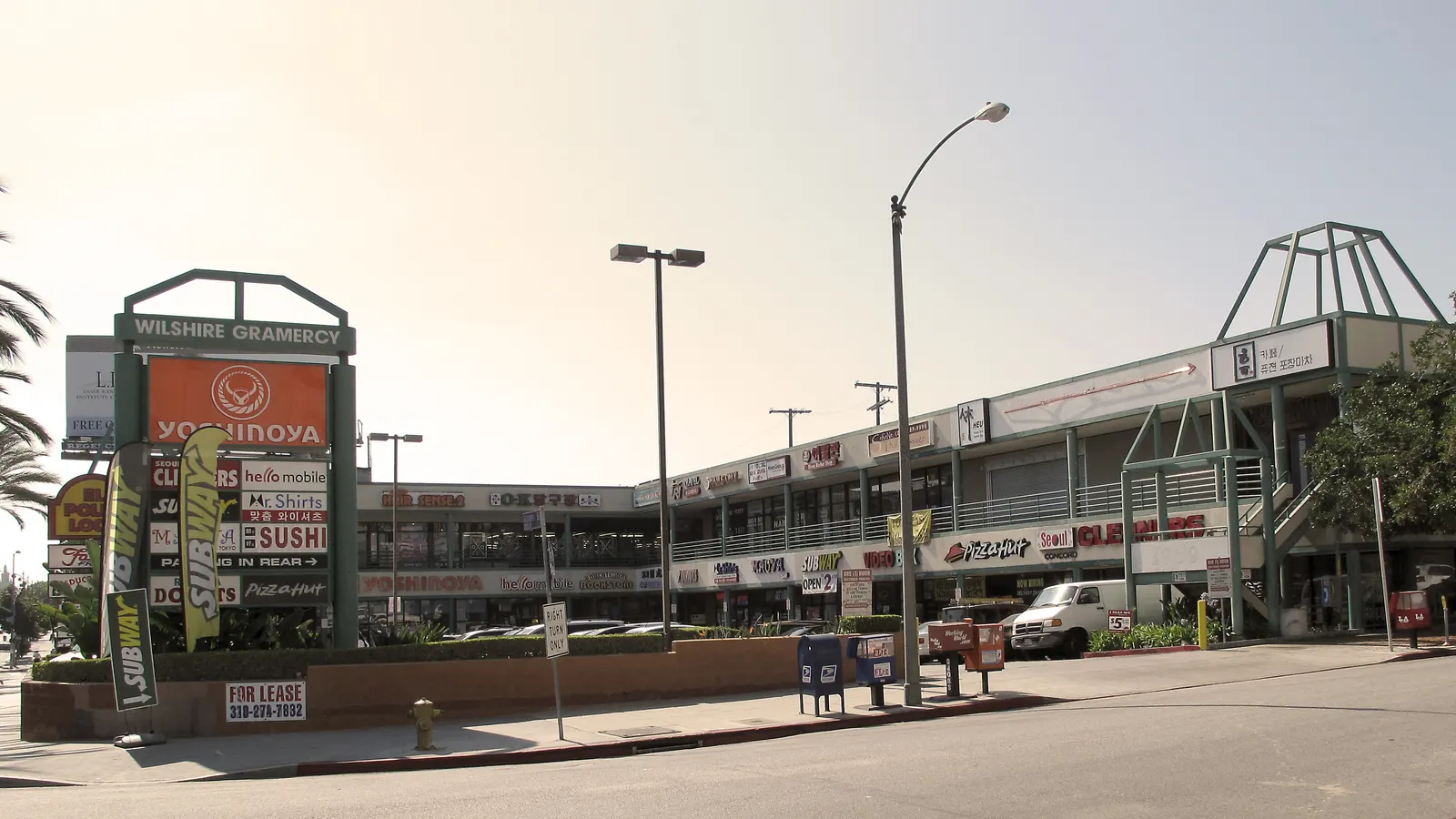
A corner mini-mall in Koreatown, Los Angeles. Photo: Downtowngal, CC BY-SA 3.0, via Wikimedia Commons, cropped.
That tension has never really gone away. The building gets judged by how it looks. The businesses inside get judged by nothing at all, because most people never think about who owns them.
Where the rent is
The most important thing about a strip mall is not its parking lot or its sign. It is its rent.
Cushman & Wakefield's latest national retail report puts average asking rent at U.S. shopping centers, which includes strip and neighborhood centers, at about $25 per square foot a year. Compare that with the walkable, mixed-use districts that show up in every "best neighborhoods" list. In New York, CBRE's 2025 retail rent report puts the average in those districts at $91.40. In Los Angeles, high-street rents run more than triple suburban ones.
Those numbers describe different buildings in different cities, so they are not a precise comparison. But the direction is not subtle. If you are a first-time owner with a family recipe, a cosmetology license or a tax preparation business and not much capital, the photogenic downtown is often simply not available to you. The strip center is.
Jonathan Crisman, an urban planning professor who has written about Los Angeles strip malls, described them to Metropolis as places where entrepreneurs could invent new businesses "with a relatively low barrier to entry." The same piece makes the point plainly: getting into one did not require generational wealth or easy access to credit.
And the space holds up. According to the brokerage Matthews, unanchored strip centers were running a 4.5% vacancy rate in 2025, against 8.7% for enclosed malls. The report credits part of that to service businesses and to a mix of tenants that can change without the whole center failing. The indoor mall was built around department stores. The strip mall was built around whoever could sign a lease, which turns out to be a sturdier plan.
Who actually opens there
Walk a long suburban arterial in almost any American metro and read the pylon signs. You can learn more about who lives nearby from those signs than from most census tables.
The Metropolis piece describes a typical Los Angeles strip where a Mexican restaurant sits between a Korean-owned nail salon and an Armenian alterations shop. That is not a cute exception. It is the pattern. The American Immigration Council found that immigrants owned 28% of what it calls Main Street businesses (retail, restaurants and neighborhood services) as of 2013, including 45% of nail salons, 53% of grocery stores and 38% of restaurants. Those are exactly the tenants a strip center is designed to hold.
Houston may be the clearest example in the country. Its Asiatown traces back to 1983, when a developer and his uncle revitalized a shopping plaza at Bellaire and Ranchester and opened the first Asian supermarket in the area, according to Houstonia. Houston has no zoning and easy permitting, and the writer notes it was relatively cheap to start a small business there. Today Bellaire Boulevard is described by the same magazine as a sprawl of car-friendly strip malls stuffed with award-winning restaurants, dentists and hair salons, anchored by Asian grocery stores.
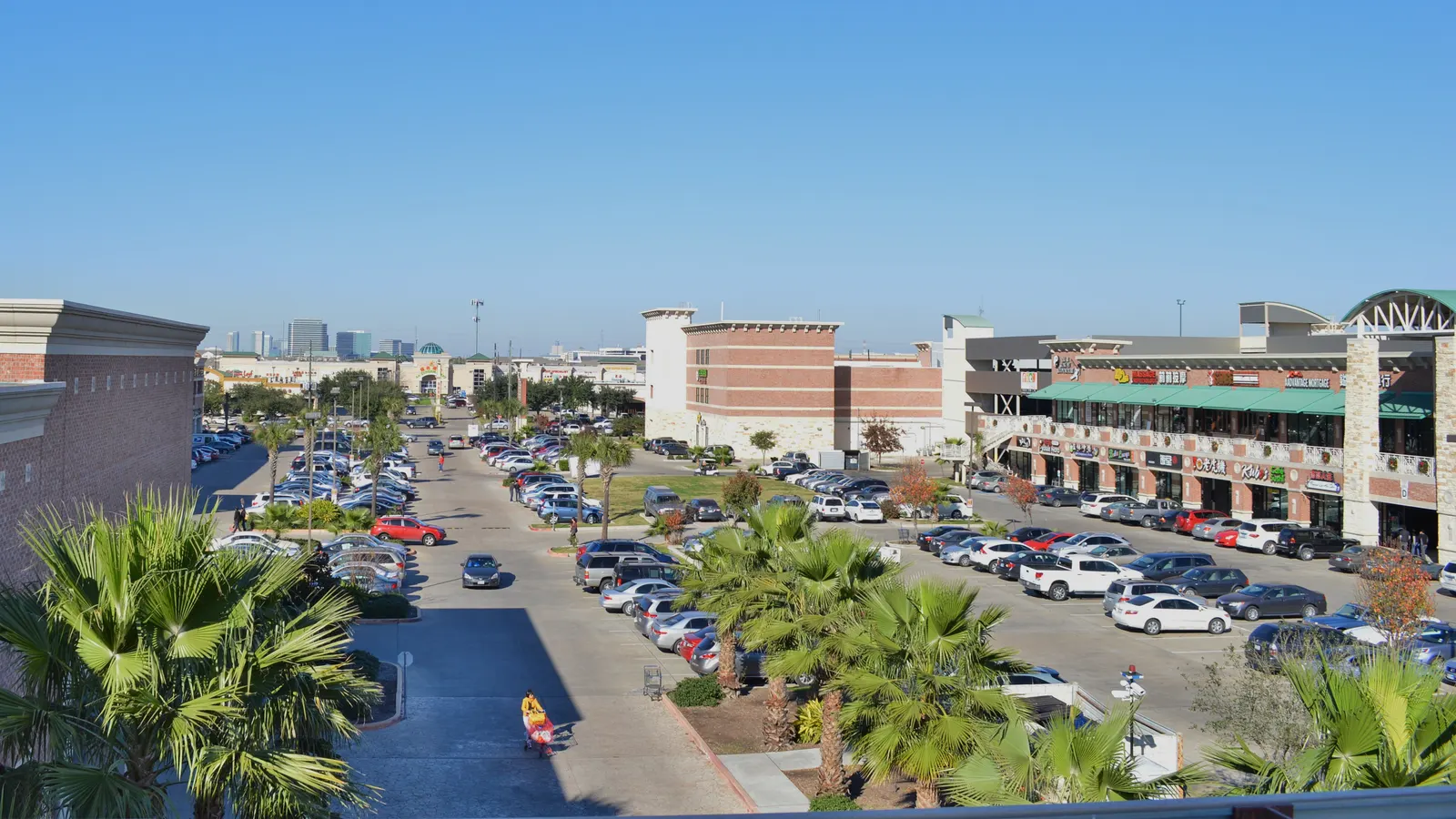
Shopping plazas in Houston's Chinatown, east of Beltway 8. Photo: Agsftw, CC BY-SA 3.0, via Wikimedia Commons, cropped.
If you want to see it with someone who knows it, Houston Asiatown Tours runs food and culture tours down Bellaire Boulevard, with dim sum, a temple, a grocery and a bakery. On the same road you will find places like Crawfish & Noodles, which does Vietnamese and Viet-Cajun cooking.
Metro Atlanta has its own version on Buford Highway, a long commercial road the DeKalb History Center describes as a run-of-the-mill strip of used car lots and fast food in the 1960s and 1970s. By 2009, the Atlanta Journal-Constitution was reporting that Asian business owners had come for cheap leases and reliable traffic, and later that countless immigrant-owned businesses now share its strip mall space, as quoted in the DeKalb History Center's history of the road's signs.
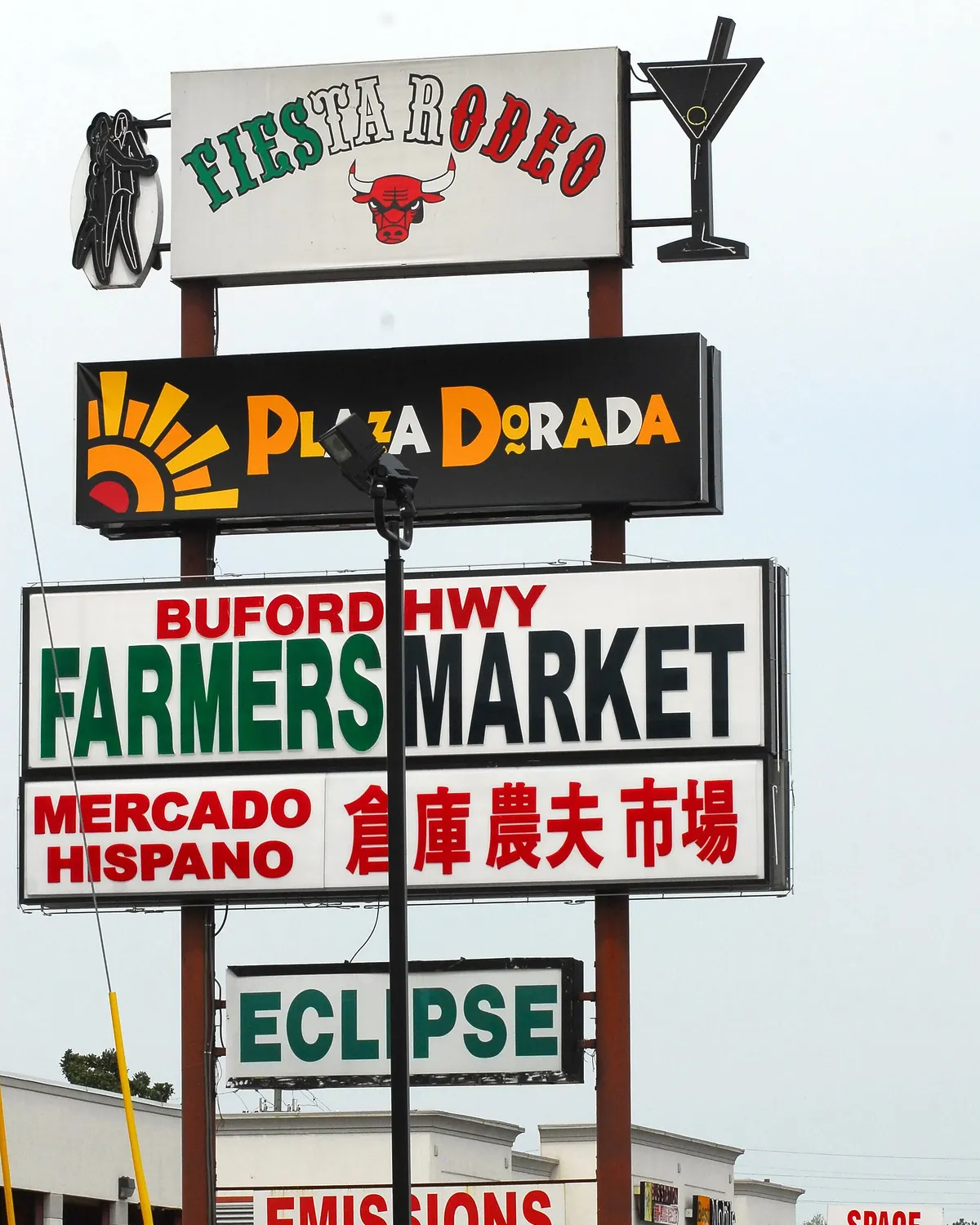
One sign, three languages, on Buford Highway. Photo: Kate Medley for the Southern Foodways Alliance, CC BY 2.0, via Wikimedia Commons, cropped.
Look at that sign for a second. A farmers market with its name in English, Spanish and Chinese, stacked under the sign for Plaza Dorada. That is a whole theory of American retail on one pole.
The Dallas area has one of the bigger examples. Asia Times Square in Grand Prairie is a plaza of more than 40 eateries, from pho and Korean fried chicken to Filipino food, bubble tea and bakeries, around a large Asian grocery. Our guide to Asian-owned businesses in Dallas covers more of that corridor.
And it is not only immigrant owners. When Clifton and Sharon Freshwater brought Freshwaters to Charlotte, their Cajun and Creole restaurant opened in 2015 as a full-service room in a Fourth Ward strip mall. That is how a lot of family restaurants get their start: not in a historic storefront, but in the unit between the cleaners and the phone store.
The best restaurants were never hiding
For years, food media treated the strip mall as a place you went despite. The good stuff was supposed to be downtown.
Jonathan Gold did more than anyone to change that. The Los Angeles critic won the 2007 Pulitzer Prize for Criticism, the first restaurant critic to do so, largely by writing about small places other critics skipped. After his death in 2018, Anthony Bourdain credited him with moving attention from white tablecloths to "really cool little places in strip malls."
The awards have followed. When the MICHELIN Guide profiled Kato in 2019, it described a 27-seat restaurant from the son of a Taiwanese immigrant family, tucked into the corner of a West Side strip mall. The restaurant has since moved downtown. In Houston, chef Benchawan "G" Jabthong Painter won the 2023 James Beard Award for Best Chef: Texas while her restaurant, Street to Kitchen, was still in what Houstonia called a 36-seat strip center space. It has since grown.
Notice the pattern in both stories. The strip mall is where the business became good enough to leave. That is not a failure of the building. That is the building doing its job.
Something similar happened with California's doughnut shops. Cambodian refugee families built an entire niche in them, and by the 1990s there were roughly 1,500 Cambodian-owned doughnut shops in the state, according to PBS SoCal's Lost LA. If you have ever bought a doughnut at 6 a.m. on the way to work in Southern California, you probably bought it in a strip mall, from one of those families.
What the parking lot is for
Urbanists love to criticize the parking lot, and they have a point. It is not a great place to spend an afternoon.
But the parking lot is also why a lot of these businesses work. A family grocery that needs customers to carry out 40 pounds of rice needs parking. A salon whose clients come from across the county needs parking. A restaurant serving a community that is spread across an entire metro, rather than packed into one walkable neighborhood, needs a place people can drive to. The walkable main street works best for people who already live on it, and those streets are often the most expensive places in town to live.
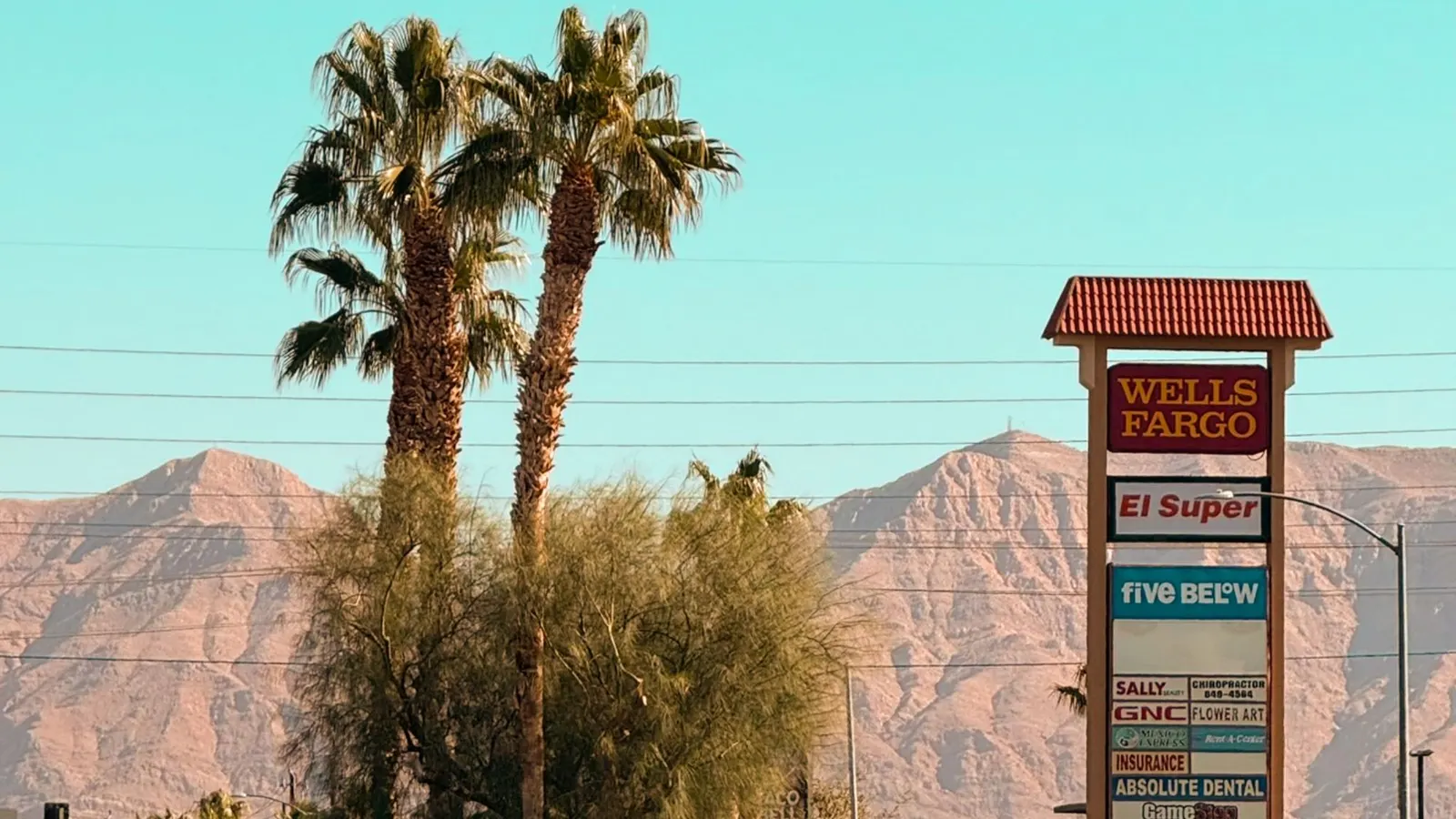
A pylon sign tells you almost everything about a neighborhood. Photo: Vitor Milanez, via Pexels.
None of this means strip malls are secretly beautiful, or that we should build more parking. It means that when we picture a "good neighborhood," we tend to picture the neighborhoods that photograph well, and those are rarely the ones where a first-time owner can afford to open.
So look up at the sign
Here is my small suggestion. The next time you are sitting at a light on a big suburban road, read the pylon sign all the way down. Past the chain at the top to the smaller names below it.
There is usually a bakery you have never tried. A tailor. A family restaurant with a menu in two languages. A salon that has been there 20 years. A tax preparer who does half the neighborhood's returns every spring.
Most of them are owned by someone local. Many of them are owned by people who could not have opened anywhere else. And almost none of them will ever show up in a "cutest main streets in America" list.
That is fine. They were never trying to be cute. They were trying to open, and the strip mall let them.
If you are looking for places like these near you, start with the immigrant-owned, Asian-owned and Latino-owned businesses in our directory, or our guide to diverse-owned restaurants in Houston. And if you own one of those units yourself, you can list your business free.
Sources
- Los Angeles Times, "A Brief History of the Mini-Mall," November 16, 1997: latimes.com
- Los Angeles Times, "The Southern California Mini-Mall's Rise and Fall," October 11, 1998: latimes.com
- Metropolis, "How Strip Malls Reflect the Diversity of Los Angeles's Neighborhoods," September 26, 2019: metropolismag.com
- Cushman & Wakefield, U.S. Retail MarketBeat, Q3 2025: cushmanwakefield.com
- CBRE, "2025 Retail Rent Dynamics," May 7, 2025: cbre.com
- Matthews, "No Anchor, No Problem: Unanchored Strip Center Report," September 2025: matthews.com
- American Immigration Council, immigrant small business owners (data as of 2013): americanimmigrationcouncil.org
- Houstonia, "The Story of Asiatown Is Very Houston," May 31, 2023: houstoniamag.com
- Houstonia, on Bellaire Boulevard, November 20, 2025: houstoniamag.com
- DeKalb History Center, "Buford Highway: Signs of Diversity," April 21, 2021: dekalbhistory.org
- The Pulitzer Prizes, Jonathan Gold, 2007 Criticism: pulitzer.org
- LAist, on Jonathan Gold, July 21, 2018 (archived): web.archive.org
- MICHELIN Guide, on Kato and chef Jon Yao, November 25, 2019: guide.michelin.com
- Houstonia, on Street to Kitchen, March 28, 2024: houstoniamag.com
- PBS SoCal, Lost LA, on Cambodian American doughnut shops: pbssocal.org
- Cover photo: Chris F, via Pexels
About this note. This is an opinion piece, signed by the person who wrote it. Any business it links to is described by its own sourced listing, and a mention here is never an ownership claim.
In this note
Every place mentioned above, with its full listing.
Go deeper
More notes


Know a place we should write about?
Tell us where you felt welcome, or list your own business free with a source you control.