We Noticed
Why Are Restaurants So Loud?
Richard September 25, 2026 7 min read
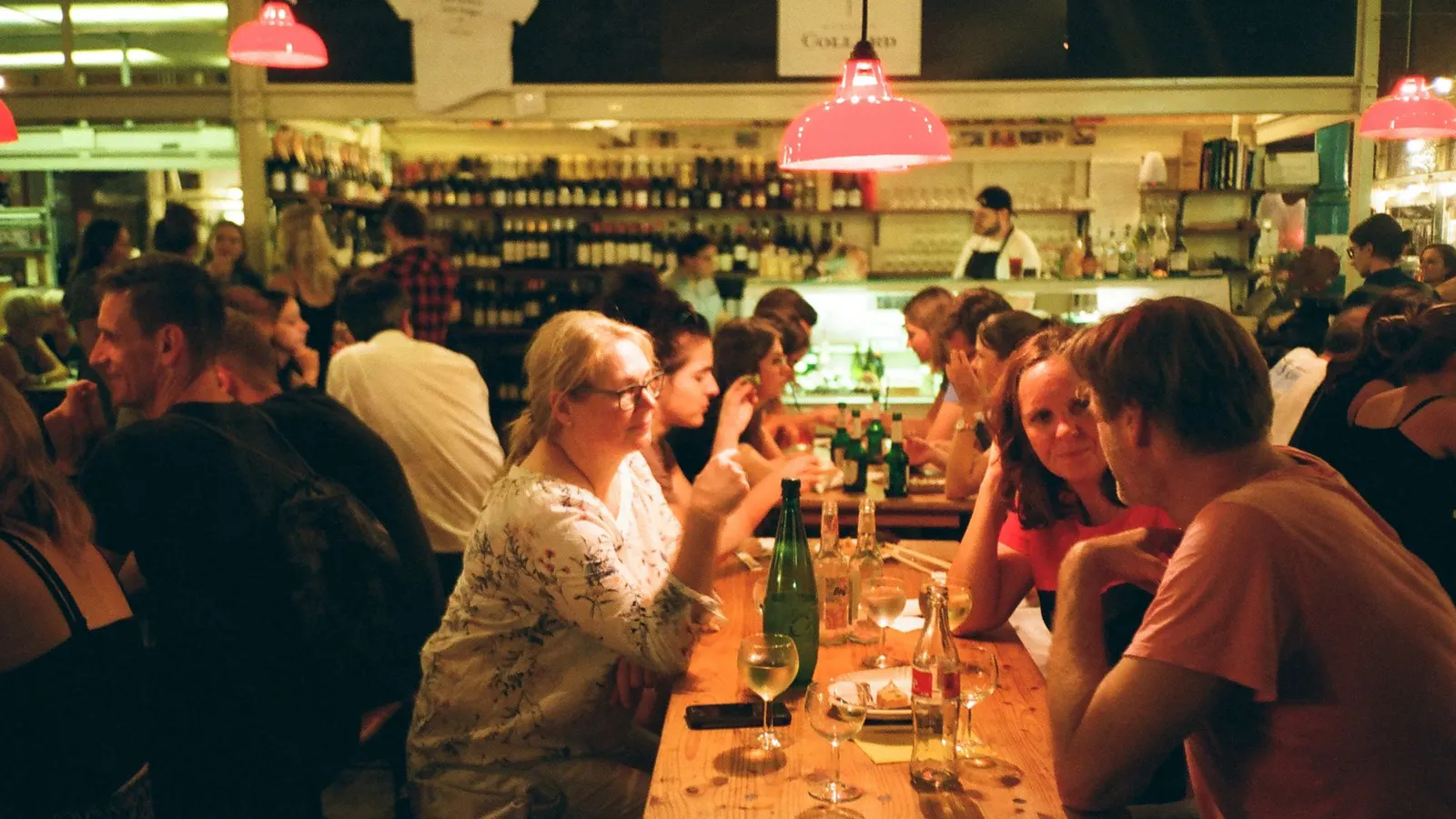
Why Are Restaurants So Loud?
At some point in the last decade I became the person at the table saying "What?" three times and then just nodding.
I used to assume it was me. Then I started noticing everyone else doing it too. The couple next to us leaning halfway across their table. The server crouching down to take an order like a coach calling a play. A group of friends who had clearly given up on conversation and were just sort of smiling at each other over their drinks.
It is not just me, and it is not just you. When Zagat asked nearly 13,000 diners what bothered them most about eating out, the top answer was not prices or service. It was noise, at 24%, narrowly ahead of service. (The same survey found 70% of diners are "over" backless stools, which I will be returning to in a future note.)
It got louder on purpose, sort of
Nobody set out to build a loud restaurant. They set out to build a good-looking one.
The look of the last 15 years is familiar: high open ceilings with the ductwork showing, concrete or wood floors, a long hard bar, metal chairs, big windows, no tablecloths, nothing soft anywhere. Back in 2008, Washington Post critic Tom Sietsema told NPR that lofty ceilings, uncarpeted floors and all those hard edges "just bounce the noise around like crazy." In 2024, acoustics professor Lily Wang told the Washington Post that the change is partly aesthetic, a desire for a vibe that is "kind of industrial or cool."
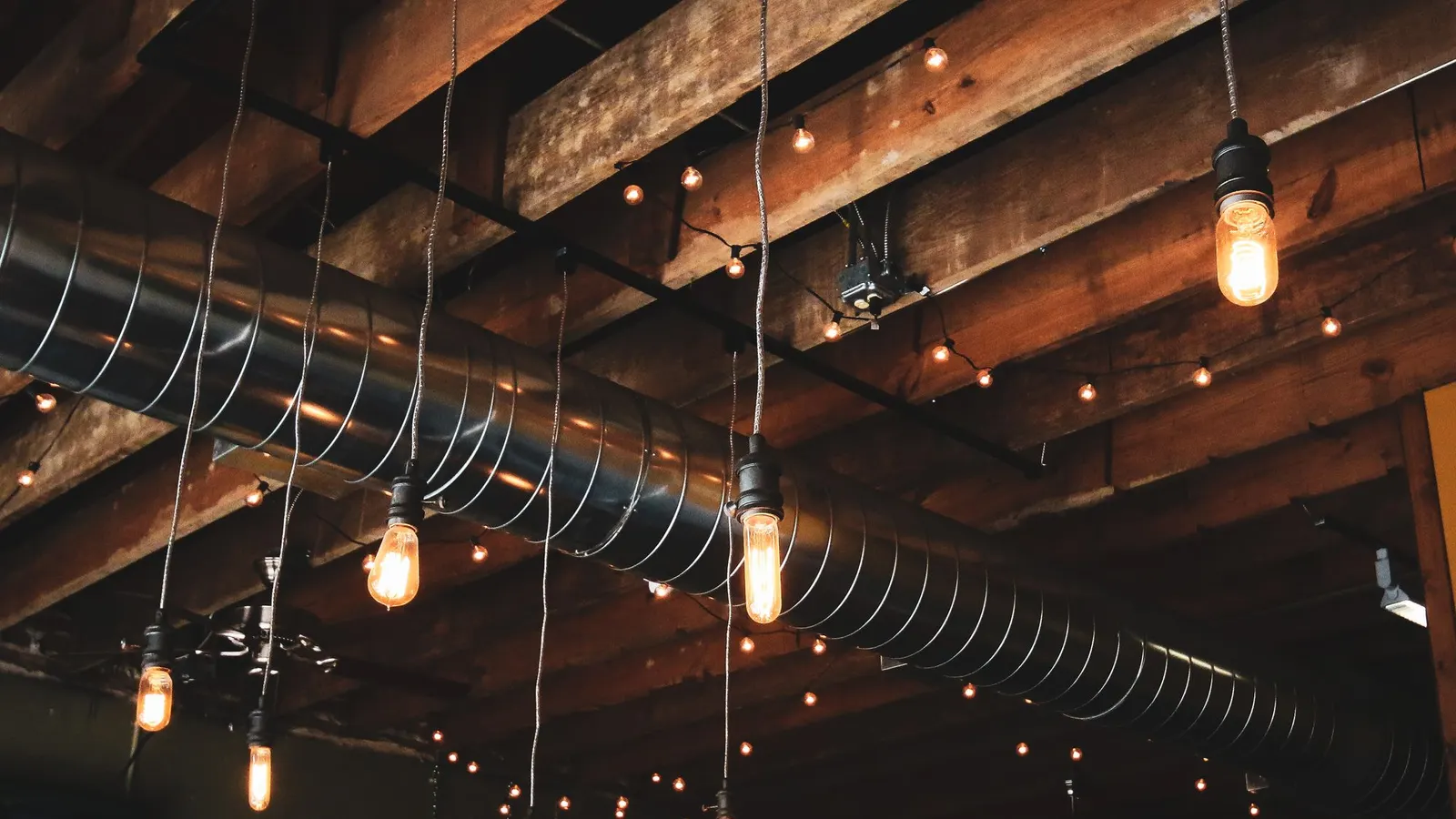
Beautiful. Also a very efficient way to send every conversation in the room straight back down. Photo via Pexels.
Hard surfaces reflect sound instead of absorbing it. Concrete, metal and glass send most of it straight back into the room. Carpet, curtains, upholstered booths and tablecloths used to soak a lot of it up, and most of them have quietly disappeared.
Then everyone makes it worse
Here is the part I found genuinely interesting. Once a room gets loud, the people in it make it louder.
When there is noise around us, we raise our voices without thinking about it. That adds noise, so the table next to us raises theirs, and so on around the room. It has a name, the Lombard effect, after a French doctor who described it in 1909, and it shows up in the acoustics research on restaurants, including a 2010 study of eating establishments in Applied Acoustics.
The same study has the hopeful flip side. Because people lower their voices as a room gets quieter, adding sound-absorbing material helps about twice as much as you would expect. Doubling a room's absorption cut crowd noise by roughly 6 decibels in the author's model, against about 3 for a steady noise source.
How loud is too loud?
The National Institutes of Health puts normal conversation at 60 to 70 decibels. Long or repeated exposure at 85 or above can damage hearing, which is worth remembering for the people who work a full shift in the room.
Restaurants often sit well above conversation level. SoundPrint, an app that crowdsources noise readings, found New York restaurants averaged 78 decibels at prime time in its 2018 survey. Past about 75, it noted, even people with normal hearing start having trouble following a conversation. Sietsema, who has put a decibel reading in his reviews since 2008, told the Post that about 70% of them now warn you will need to raise your voice. He has measured 100 decibels at a bar during happy hour.
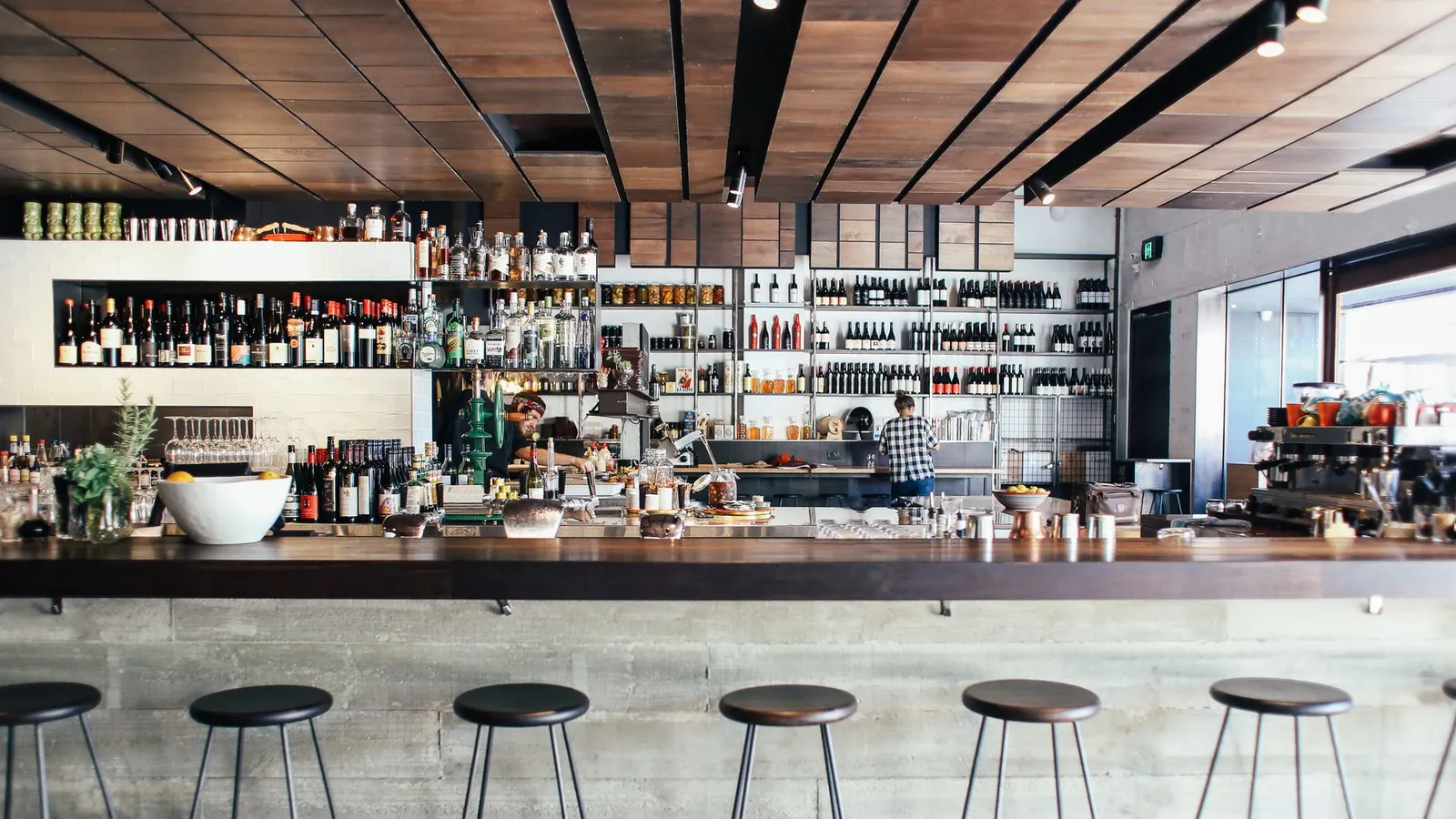
Concrete, glass, metal and backless stools. A room like this looks calm when it is empty. Photo via Pexels.
Loud is an access problem
This is where it stops being a funny complaint.
For a lot of people, a loud room is not a little annoying. It is the difference between being part of dinner and sitting through it. About 15% of American adults report some trouble hearing, and that rises to about one in three people aged 65 to 74 and nearly half of those over 75, according to NIH. The Post's reporting also points to research showing autistic people tend to be more sensitive to noise and have more difficulty filtering it from speech.
A 2022 study in Scientific Reports tested diners over 60 and found they understood conversation best, and were most willing to stay and spend money, when background noise was under 50 decibels. So a quieter room is not just kinder. It is better business with a very large group of customers.
We talk a lot about accessibility in terms of ramps and door widths, and those matter. But sound is part of whether a place works for someone too. It just does not show up in a photo of the dining room.
What actually helps
The good news is that this is fixable, and not only by gutting the room.
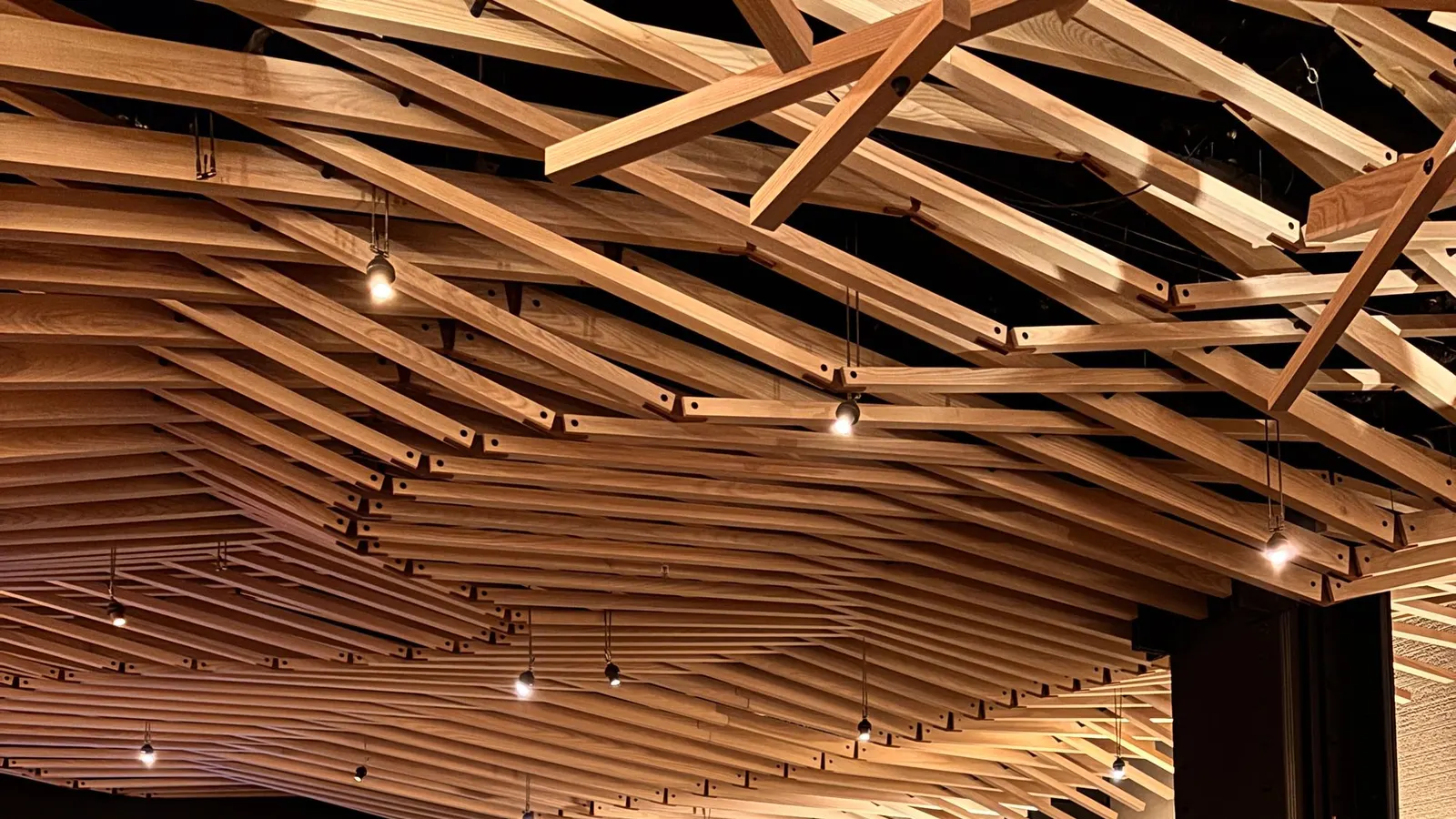
Soft does not have to look soft. Slats, baffles and panels overhead can break up sound without changing the feel of the room. Photo via Pexels.
For restaurants, the fixes the Post and the restaurant software company Toast point to are pretty ordinary:
- Acoustic panels, baffles or "clouds" on the ceiling, which can double as light fixtures. One Washington restaurant saw a huge drop in noise complaints after adding panels.
- Something soft somewhere: rugs, curtains, upholstered booths, even tablecloths, which cut the clatter of plates and glasses.
- Felt pads on chair legs.
- Turning the music down, and keeping it down if more than one person asks.
Acoustic consultants told the Post that sound treatment runs about 2 to 3% of the cost of building a new restaurant. One of them also mentioned that after a treatment went in, the first thing the servers noticed was that their back pain went away. I think about that every time I see a server crouched beside a table.
For the rest of us, the tips are simple. Go a little earlier. Ask for a booth or a corner, and away from the kitchen and the speakers. NIH's own hearing advice says the same thing, and The Hearing Journal's tips for diners with hearing loss add a couple more: ask for a quiet table when you book, and a round one if you can get it. If you want to know before you go, SoundPrint has readings for a lot of restaurants, and you can add your own.
And if a place gets it right, if you walk out after two hours and realize you heard every word, say so in your review. That is the kind of thing owners actually read, and it is the kind of detail that helps the next person decide where to go.
If you run a business and want to think about the rest of the room too, our accessible storefront checklist and our guide to sensory-friendly events are good places to start. And if you are just hungry, browse the restaurants in our directory. Maybe ask for the booth.
Sources
- Zagat, 2018 National Dining Trends Survey, January 8, 2018: zagat.googleblog.com
- The Washington Post, "Why restaurants are so loud, and what science says we can do about it," June 2, 2024: washingtonpost.com
- NPR, All Things Considered, "Noisy Restaurants Draw Complaints From Diners," April 9, 2008: npr.org
- Jens Holger Rindel, "Verbal communication and noise in eating establishments," Applied Acoustics, December 2010: sciencedirect.com
- SoundPrint, New York restaurant and bar noise survey, August 15, 2018: prnewswire.com
- National Institute on Deafness and Other Communication Disorders, Noise-Induced Hearing Loss: nidcd.nih.gov
- National Institute on Deafness and Other Communication Disorders, Age-Related Hearing Loss: nidcd.nih.gov
- Bottalico et al., Scientific Reports, April 21, 2022: nature.com
- Toast, "How to Know If Your Restaurant Is Too Loud," November 4, 2024: toasttab.com
- The Hearing Journal, "Dining Out for People with Hearing Loss," January 2020: journals.lww.com
- Cover photo via Pexels
About this note. This is an opinion piece, signed by the person who wrote it. Any business it links to is described by its own sourced listing, and a mention here is never an ownership claim.
Go deeper

More notes
Know a place we should write about?
Tell us where you felt welcome, or list your own business free with a source you control.