LGBTQIA+ Businesses
Corporate Pride vs. Real Support in 2026: How to Tell the Difference
Updated July 26, 2026 7 min readConsumer Guide
On this page (9 sections)
Every June, logos turn rainbow and limited-edition merchandise appears. For years the open question has been whether that visibility reflects durable commitment or seasonal marketing. In 2025 and into 2026, that question got sharper, because corporate participation in Pride shifted noticeably, and in both directions. Some longtime sponsors of major Pride events reduced or withdrew funding, while others held steady or stepped up. As a shopper, you are left trying to read signals that companies themselves are actively managing.
This guide gives you a practical, non-partisan way to distinguish genuine year-round support from surface-level "rainbow-washing." It is not about judging politics. It is about aligning your spending with what a company actually does across all twelve months, and about a simple alternative that sidesteps the guesswork entirely: buying directly from LGBTQ-owned businesses.
Quick answer
- Judge companies by year-round behavior, not by whether a June logo turns rainbow.
- Rainbow-washing is seasonal marketing that is not backed by policies, money, or sourcing.
- Check concrete signals: nondiscrimination policies, benefits, and public commitments that persist outside June.
- The Human Rights Campaign's Corporate Equality Index (CEI) is one structured benchmark, though it is one input, not the whole story.
- Look for real dollars: documented donations, multi-year partnerships, and community grants.
- Watch what a company does when support is unpopular, not only when it is easy.
- Sourcing from LGBTQ-owned suppliers is a stronger signal than any advertisement.
- Corporate Pride participation shifted in 2025 to 2026 in both directions, so verify current behavior rather than reputation.
- The most direct way to help is to spend at LGBTQ-owned businesses.
- Use the directory to find and support LGBTQ-owned businesses near you.
Why this matters in 2026
Corporate involvement in Pride has become genuinely harder to read. Multiple large Pride organizations reported in 2025 that some longtime corporate sponsors scaled back or declined to renew funding, and news outlets including the Associated Press and Reuters covered event organizers adjusting budgets as a result. At the same time, other companies publicly maintained or expanded their commitments. The landscape is mixed, which means a company's reputation from three years ago is not a reliable guide to what it is doing now.
This matters for your money because marketing and substance can move independently. A brand can quietly keep strong internal policies while dialing back visible June advertising, or it can run a splashy campaign while offering little of substance underneath. Reading only the surface, in either direction, will mislead you.
Structured benchmarks help. The Human Rights Campaign publishes the Corporate Equality Index, which rates large employers on nondiscrimination protections, benefits, and related practices. It is a useful, sourced starting point. It is also just one lens, focused on large employers and self-reported data, so treat a high or low score as one data point among several rather than a verdict.
What does rainbow-washing actually look like?
Rainbow-washing is the practice of adopting LGBTQ+ symbolism for marketing while doing little to support LGBTQ+ people materially. The tell is a gap between the message and the mechanics. A company sells Pride merchandise but has no nondiscrimination policy covering gender identity. Its logo changes in June and reverts on July 1 with no year-round program behind it. It markets to LGBTQ+ customers in supportive regions while quietly tailoring its message elsewhere.
None of these observations require you to assume bad intent. You are simply checking whether the visible gesture is connected to anything durable.
Which signals separate genuine support from performance?
Use the table below as a checklist. No single row is decisive, but a pattern across several is informative.
| Signal | Genuine, year-round support | Performative or seasonal |
|---|---|---|
| Nondiscrimination policy | Explicitly covers sexual orientation and gender identity, published year-round | Vague or absent, mentioned only in campaigns |
| Employee benefits | Inclusive health coverage and parental leave for all family structures | Marketing without matching internal policy |
| Financial commitment | Documented, multi-year donations or grants | One-off June sponsorship or none |
| Supplier diversity | Sources from certified LGBTQ-owned suppliers | No supplier program |
| Consistency across markets | Same stance in supportive and unsupportive regions | Message changes by audience |
| Behavior under pressure | Maintains commitments when unpopular | Retreats quietly when criticized |
| Community relationship | Ongoing partnerships with LGBTQ+ organizations | Logo swap with no partner |
How do you verify a company's claims?
Start with primary sources. Read the company's own careers and diversity pages for its current nondiscrimination language, and note whether it is dated or evergreen. Cross-check any equality claims against the HRC Corporate Equality Index. Look for specific, verifiable numbers on donations rather than adjectives like "proud supporter." For supplier claims, LGBTQ-owned certification is often issued by the National LGBT Chamber of Commerce (NGLCC), whose certified-supplier directory is public. If a company markets heavily but offers no policy, no partner, and no dollar figures, treat the campaign as marketing.
| What to check | Where to look | What a strong answer looks like |
|---|---|---|
| Current policies | Company careers or DEI page | Explicit, dated, and specific |
| Equality benchmark | HRC Corporate Equality Index | A recent score plus criteria met |
| Real spending | Press releases, foundation reports | Named recipients and amounts |
| Supplier sourcing | NGLCC certified directory | Verified LGBTQ-owned suppliers |
| Consistency | News coverage across regions | Same commitments everywhere |
Common mistakes to avoid
| Mistake | Why it misleads | Do this instead |
|---|---|---|
| Judging by the June logo alone | Symbols are the easiest thing to change | Check year-round policies and dollars |
| Trusting old reputation | Corporate behavior shifted in 2025 to 2026 | Verify current actions, not past ones |
| Treating one CEI score as the whole answer | It covers large employers and self-reported data | Combine it with donations and sourcing |
| Assuming a scaled-back logo means abandonment | A brand may keep strong internal policy | Look at benefits and partnerships too |
| Rewarding marketing over material support | Ads do not fund community programs | Prioritize documented commitments |
| Overlooking LGBTQ-owned businesses | The most direct support is bypassed | Buy from owners, not just allies |
How can you redirect support to LGBTQ-owned businesses?
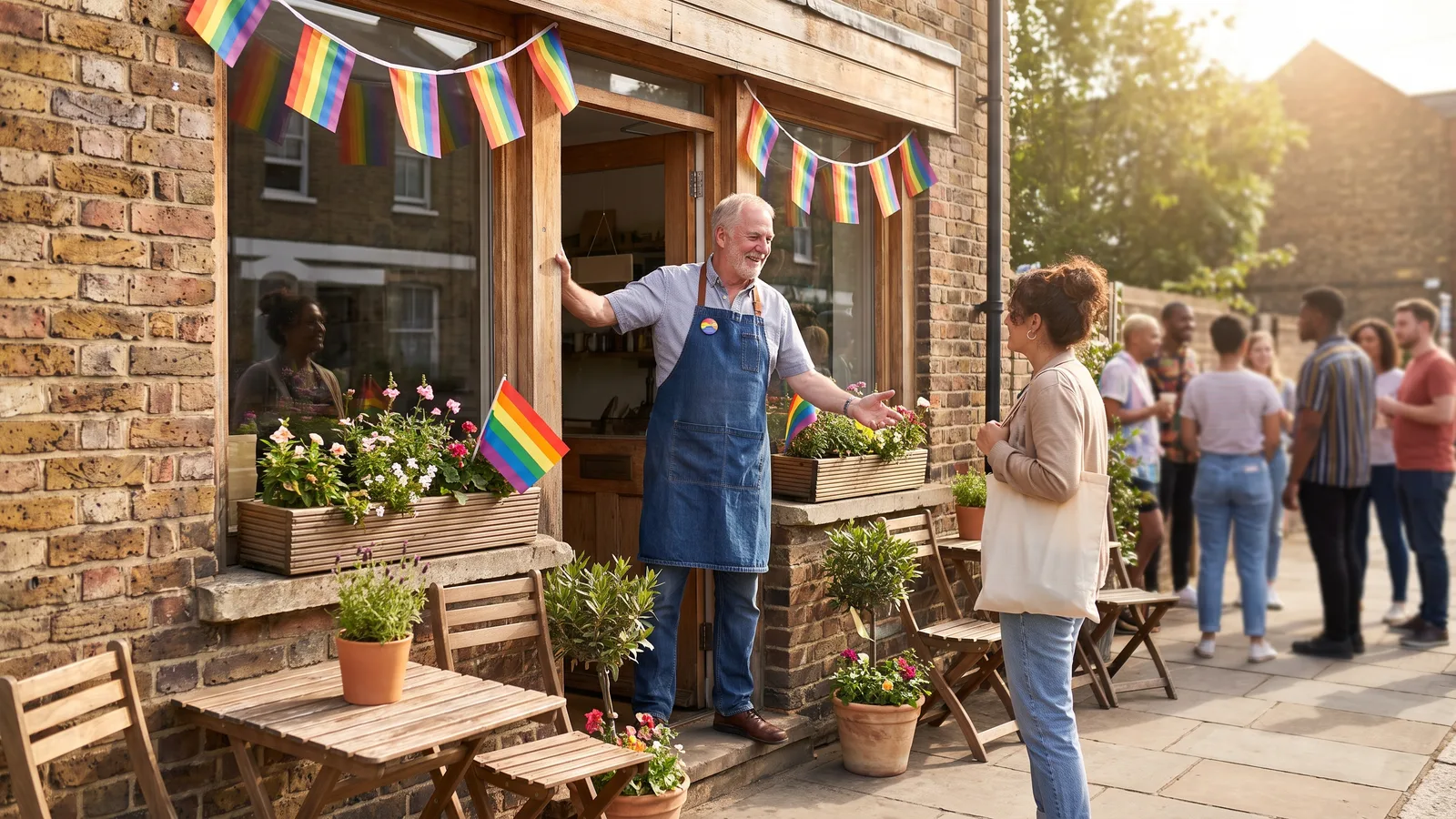
The cleanest way to avoid the entire genuine-versus-performative debate is to spend where the ownership itself is the support. When you buy from an LGBTQ-owned business, your money reaches an owner directly, no campaign interpretation required. Find them through NGLCC-certified supplier listings, local LGBTQ+ chambers of commerce, and our directory. Make it a habit rather than a June event: choose these businesses for services you already need, leave honest reviews, and refer friends. That steady demand does more than any seasonal sponsorship, and it is entirely within your control.
FAQ
Is corporate Pride marketing a bad thing?
Not inherently. Visibility can help. The point is to check whether the visible gesture is backed by year-round policies, spending, and behavior, rather than assuming either the best or the worst.
What changed about corporate Pride in 2025 and 2026?
Participation shifted in both directions. Several major Pride events reported some sponsors reducing or withdrawing funding, while other companies maintained or increased support. Because the picture is mixed, verify current behavior rather than relying on reputation.
What is the Corporate Equality Index?
It is a benchmark published by the Human Rights Campaign that rates large employers on nondiscrimination protections, inclusive benefits, and related practices. It is a useful, structured input, though it is one lens focused on large, self-reporting employers.
How can I tell if support is genuine?
Look for a pattern across several signals: durable nondiscrimination policies, inclusive benefits, documented donations, supplier sourcing from LGBTQ-owned firms, and consistency when support is unpopular.
Does a company removing its rainbow logo mean it stopped supporting the community?
Not necessarily. A brand might dial back visible advertising while keeping strong internal policies, or the reverse. Judge by year-round mechanics, not the logo alone.
What is the most direct way to help?
Spend at LGBTQ-owned businesses. Your money reaches the owner without any need to interpret a marketing campaign.
Where can I find LGBTQ-owned businesses?
Use NGLCC-certified listings, local LGBTQ+ chambers of commerce, and our directory. You can also add your business so more customers can find it.
Sources
- Human Rights Campaign, Corporate Equality Index: https://www.hrc.org/resources/corporate-equality-index
- National LGBT Chamber of Commerce (NGLCC): https://nglcc.org/
- Associated Press coverage of corporate Pride sponsorship shifts (2025): https://apnews.com/hub/pride-month
- Reuters coverage of companies and Pride participation (2025): https://www.reuters.com/business/
- Human Rights Campaign, workplace and business resources: https://www.hrc.org/resources
- NGLCC certified LGBTBE supplier directory: https://nglcc.org/get-certified/
Keep reading



Own or know an inclusive business?
List it free so people can discover it year-round — with a source you control.
List your business